Museum open Thu–Sun 1–4 PM · 655 Presidio Ave Contact
San Francisco Fire Department · Organized December 3, 1866

160 Years
Answering the Call

December 3, 1866  ·  December 3, 2026

On December 3, 1866, San Francisco's paid fire department was organized and took over from the volunteers who had protected the city since 1849. One hundred sixty years later, the SFFD is still answering the call. Here is its story, decade by decade, from the Guardians of the City collection.

The founding story · December 3, 1866

How the department was organized

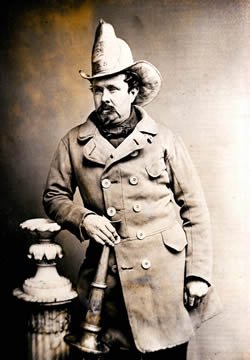
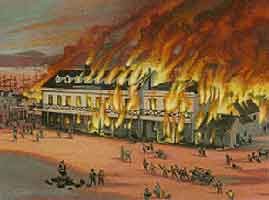
For seventeen years San Francisco was protected by volunteers. After a fire on Christmas Eve 1849 destroyed some fifty buildings, former Eastern firemen led by Frederick D. Kohler and David C. Broderick formed the city's first companies. Through the great fires of 1850 and 1851, they hauled hand-pumped engines through the streets themselves.

By 1866 the volunteer department had grown to 14 engine companies, 3 hook and ladder companies, 5 hose companies and 775 active members, and it answered 220 alarms in its final year. But the city was growing faster than volunteers could keep up with. On March 2, 1866, the State Legislature approved An Act to Establish a Paid Fire Department for the City and County of San Francisco.

That spring the city bought Amoskeag steam fire engines from Manchester, New Hampshire, for $17,655, and that summer 27 horses to pull them. One of the new steamers proved itself before the department even existed: on August 3, 1866, it went to work at a fire at Pine and Battery Streets and was praised as “a very effective machine.” On October 6, Franklin E. R. Whitney was appointed the first Chief Engineer, with Assistant Engineers Burckes and Ackerson and Superintendent of Steamers Daniel Hayes.

The last volunteer chief, David Scannell, gave public notice that the volunteers' service would end at midnight. When that hour struck and Monday, December 3, 1866 began, the paid companies took over the city's engine houses. From the first minute of December 3, the San Francisco Fire Department was organized and in service, and it has answered every alarm since.
Organized December 3, 1866. The paid department starts with one Chief Engineer, two Assistant Engineers and 13 charter companies: six steam engine companies, two hook and ladder companies and five hose companies, most of them housed in former volunteer engine houses. Each engine company has a foreman, engineer, driver, fireman and eight “call” men who answer alarms from their regular jobs.
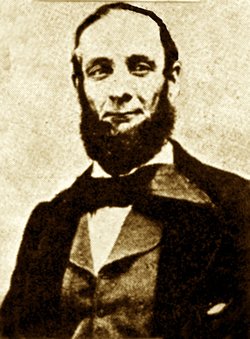
Franklin E. R. Whitney
Franklin E. R. Whitney. First Chief Engineer of the paid department, 1866–1870.
David Scannell in fire helmet and coat
David Scannell. Last chief of the volunteers, who handed the city to the paid department, then led it from 1871 to 1893.
$250Monthly salary of the Chief Engineer, set by law. A driver earned $60.
27Horses bought in July 1866 to pull the new steam engines.
159Fires fought in the department's first seven months, 44 of them set on purpose.
160Years of service on December 3, 2026.

Why “organized,” and why December 3?

San Francisco's fire service has more than one starting date, and each one marks something different.

  • December 1849The first volunteer fire companies form after the Christmas Eve fire. This is where the department's roots begin, but these were private volunteer companies, not a paid city department.
  • March 2, 1866The State Legislature passes the Act that establishes a paid fire department and a Board of Fire Commissioners. The department exists on paper, but it has no engines, horses, officers or firefighters yet.
  • April to October 1866The city buys its steam engines and horses, and on October 6 appoints Chief Engineer Franklin E. R. Whitney and his officers.
  • December 3, 1866The companies are manned, the volunteers stand down, and from the first minute of the day the paid department is organized and answering alarms. This is the day the San Francisco Fire Department as we know it began serving the city.

That is why the department marks its anniversary on December 3. It celebrates the day the paid department was organized and went to work, not the day the law was signed. December 3, 2026 is 160 years of continuous service.
1849

The volunteer years

1849 – 1866

Gold Rush San Francisco was a city of canvas, lumber and lamp oil, and fire nearly erased it again and again. Six great fires between December 1849 and June 1851 burned much of the young city. Each time, the town rebuilt, and each time the volunteer fire companies grew stronger.

On January 28, 1850, Frederick D. Kohler became the first Chief Engineer of the volunteer department. The companies were social clubs as much as fire brigades, with their own uniforms, rivalries and political power. David C. Broderick, foreman of Empire Engine Company No. 1, rose from the firehouse to the United States Senate.

Lillie Hitchcock, Knickerbocker No. 5's mascot

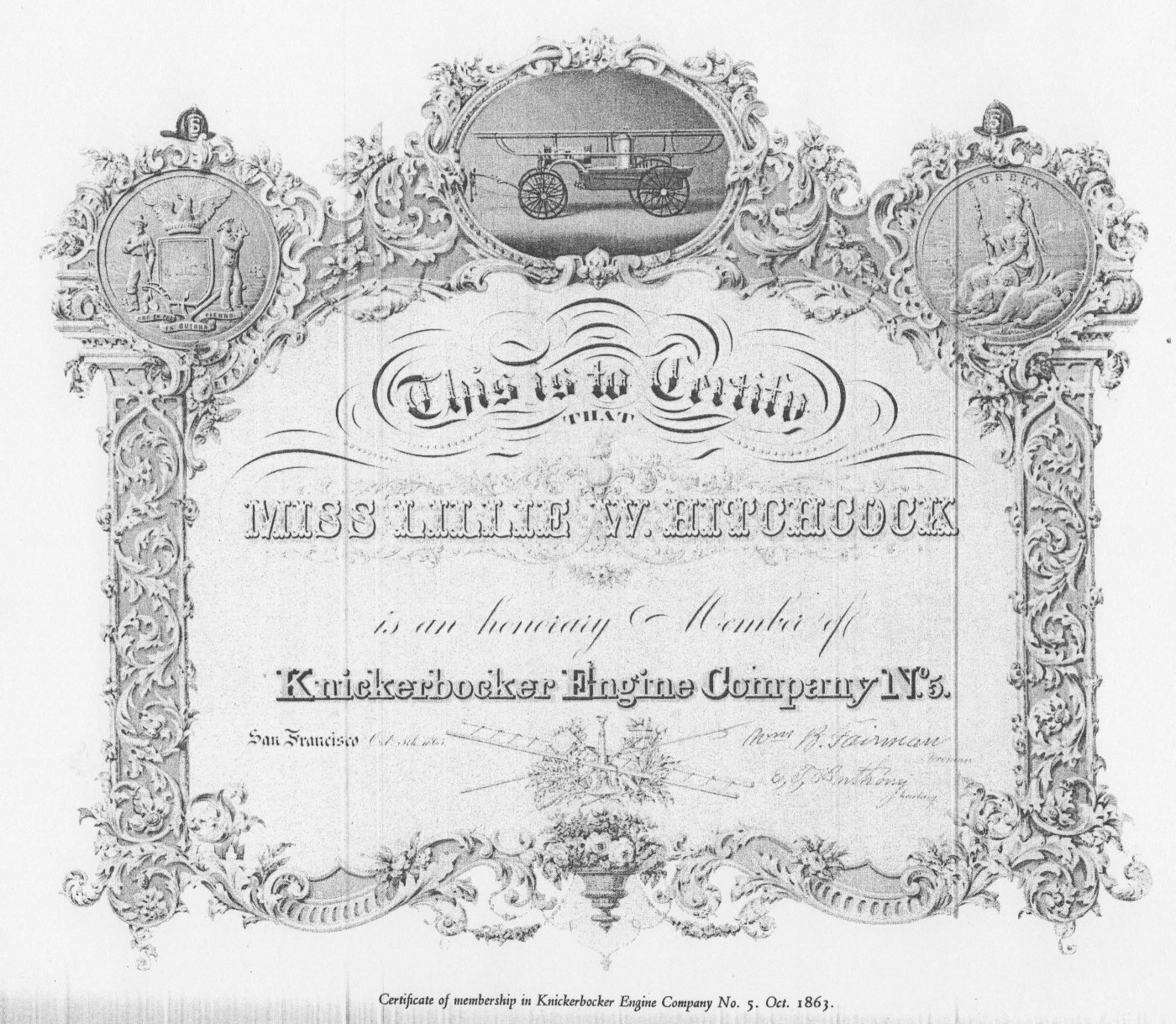
The volunteers' most famous friend was a schoolgirl. In 1858, fifteen-year-old Lillie Hitchcock was walking home from school when she saw Knickerbocker Engine Company No. 5 short-handed on the drag rope, struggling up Telegraph Hill to a fire. She dropped her books, grabbed the rope and called on bystanders to pull, and No. 5 made the climb and got first water on the fire.

From then on she ran to every alarm she could and rode atop Knickerbocker No. 5 in parades, decked in flags and flowers. On October 3, 1863, the company elected her an honorary member, the honor she called the proudest of her life. She wore her gold No. 5 badge for the rest of her days and signed her name “Lillie Hitchcock Coit – 5.” When she died in 1929, she left part of her fortune to beautify the city she loved and to honor its volunteer firemen.

Year by year the city gave them better tools. A fire bell rang out in 1851, and in 1852 the city was divided into eight fire districts so companies knew where to run. Horses first pulled San Francisco apparatus on August 19, 1863. On April 26, 1865, the new electric fire alarm telegraph sent its first alarm, the start of a system that would guide the paid department for the next century.

Illustration of the 1849 San Francisco fire
1849. The Christmas Eve fire that led the town to organize fire companies.
David C. Broderick
David C. Broderick. A founder of the volunteer department and namesake of Broderick Engine Co. No. 1.
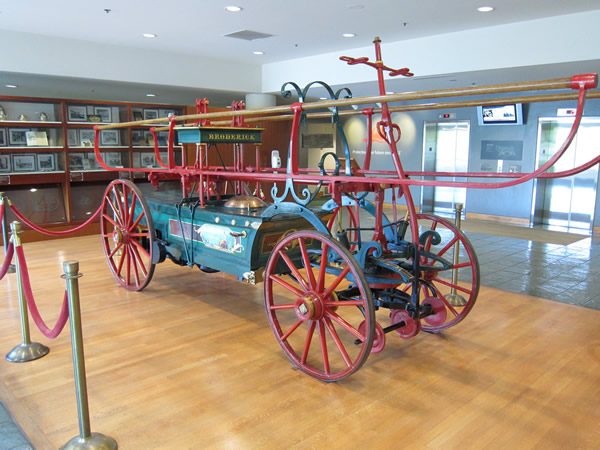
1855 Broderick Engine Co. No. 1 hand engine
1855 Broderick Engine Co. No. 1. A volunteer-era hand engine in the museum collection.
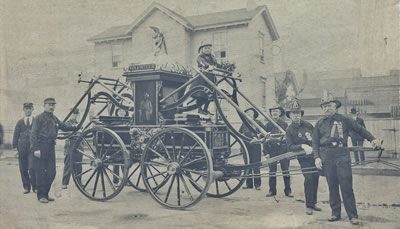
1855 Knickerbocker Engine Co. No. 5
1855 Knickerbocker Engine Co. No. 5. The engine Lillie Hitchcock rode atop in parades, now in the museum.
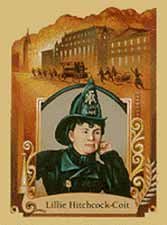
Lillie Hitchcock Coit in a Knickerbocker No. 5 fire helmet
Lillie Hitchcock Coit. Honorary member and mascot of Knickerbocker Engine Co. No. 5.
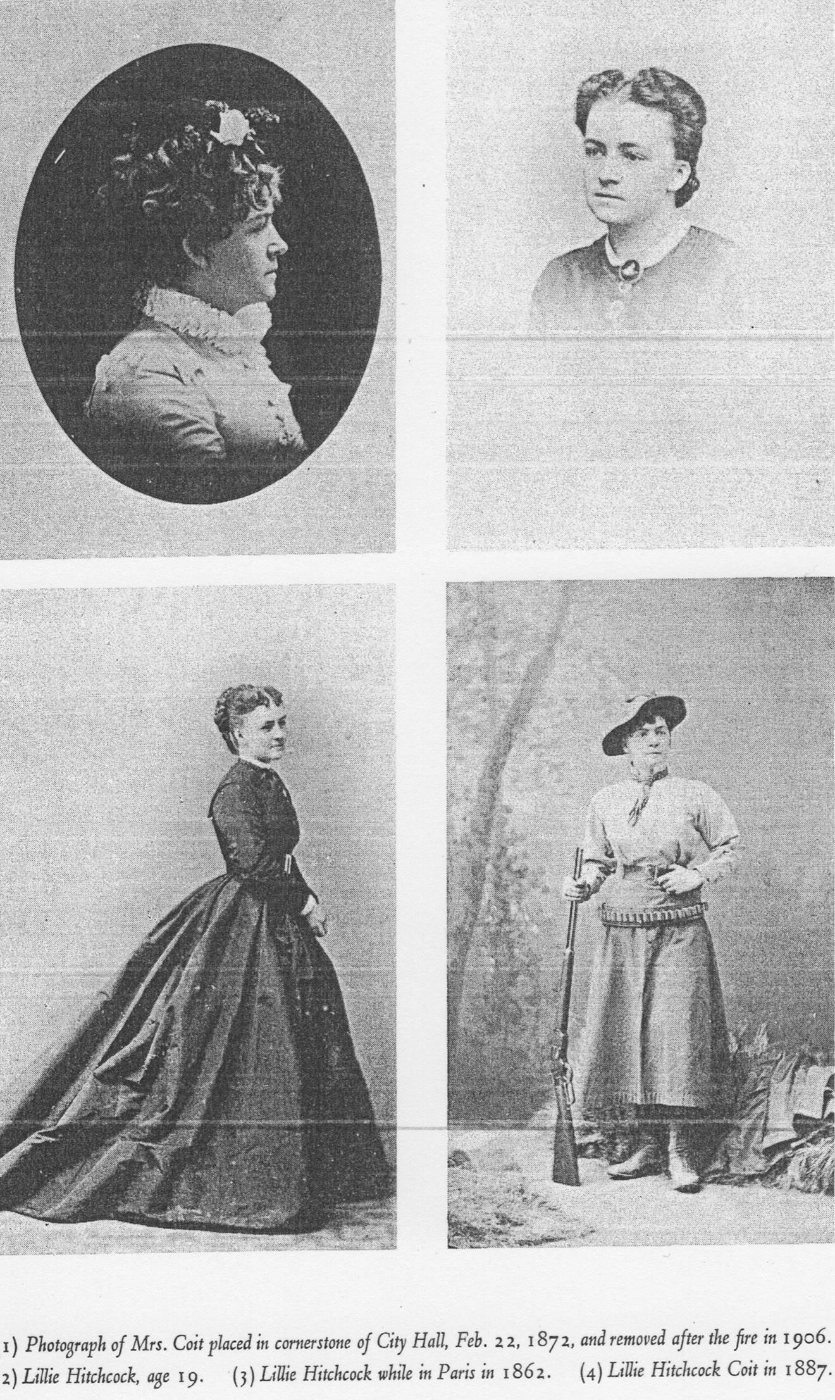
Photographs of Lillie Hitchcock Coit
Lillie Hitchcock Coit (1843–1929), photographed over the years.
Lillie Hitchcock's honorary membership certificate, Knickerbocker Engine Company No. 5
Her proudest honor. Lillie Hitchcock's honorary membership certificate from Knickerbocker Engine Company No. 5.

From the museum collection

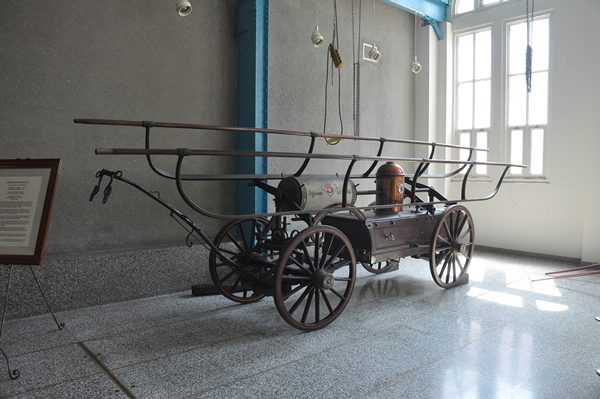
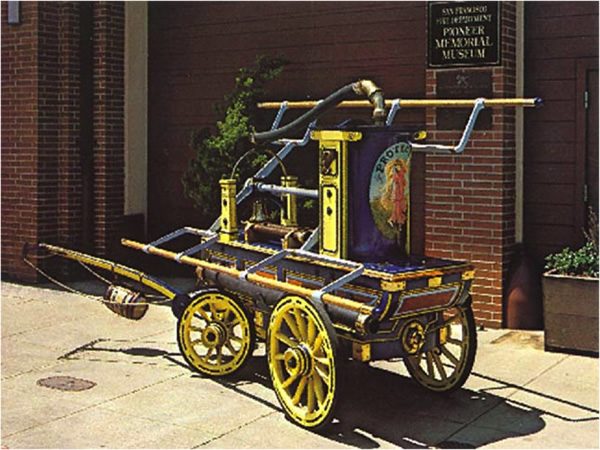
Circa 1820 Protection Co. No. 2 hand engine
Circa 1820 hand engine, Protection Co. No. 2. The oldest engine in the collection, brought west for the volunteer companies.
1850 Protection Co. hose cart
1850 Protection Co. hose cart. Pulled by hand to carry hose to the fire.
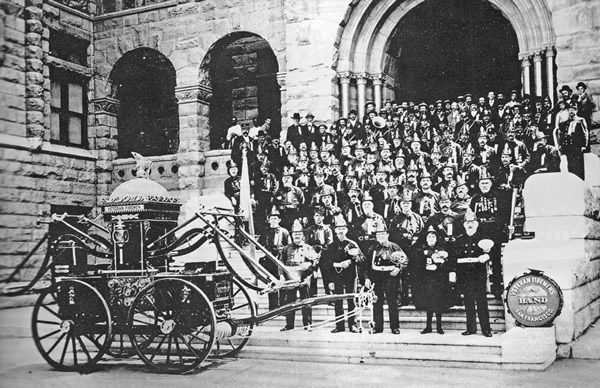
The 1858 parade engine of the Veteran Firemen's Association
1858 parade engine. Veterans of the volunteer companies kept their engines rolling in parades long after 1866.
1860s

A paid department is born

Chief Engineer Franklin E. R. Whitney 1866–1870

The new department ran on steam and horses. Each Amoskeag steamer could pump far more water than a crew of volunteers on a hand engine, and it needed only a handful of paid men plus “call men,” part-time firefighters who left their regular work when the alarm sounded.

The work started at once. In its first seven months the department fought 159 fires, and investigators believed 44 of them were set deliberately. The alarm telegraph tapped out box numbers to every engine house, and teams learned to hitch and roll in moments.

The department was soon building its own tools. In 1868 Superintendent of Steamers Daniel D. Hayes built the “Hayes Truck” in the city's shops, a horse-drawn ladder truck with a mechanically raised aerial ladder that replaced heavy ladders raised by hand. It became a model for fire departments across the country.

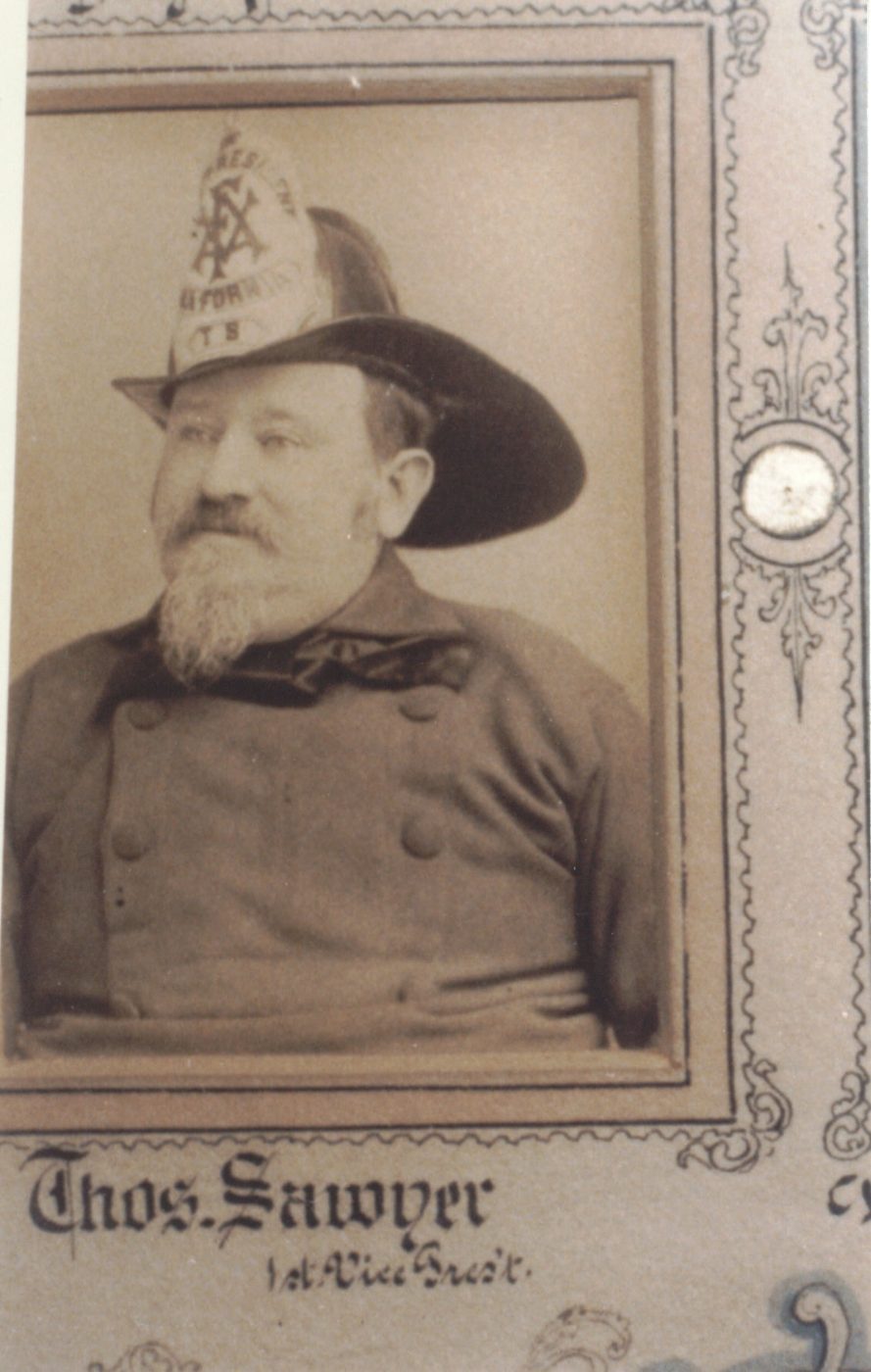
Many of the first paid firemen were volunteers who simply changed employers. Tom Sawyer, a veteran of the volunteer companies, was named Corporation Yard Keeper and looked after the department's apparatus and supplies.

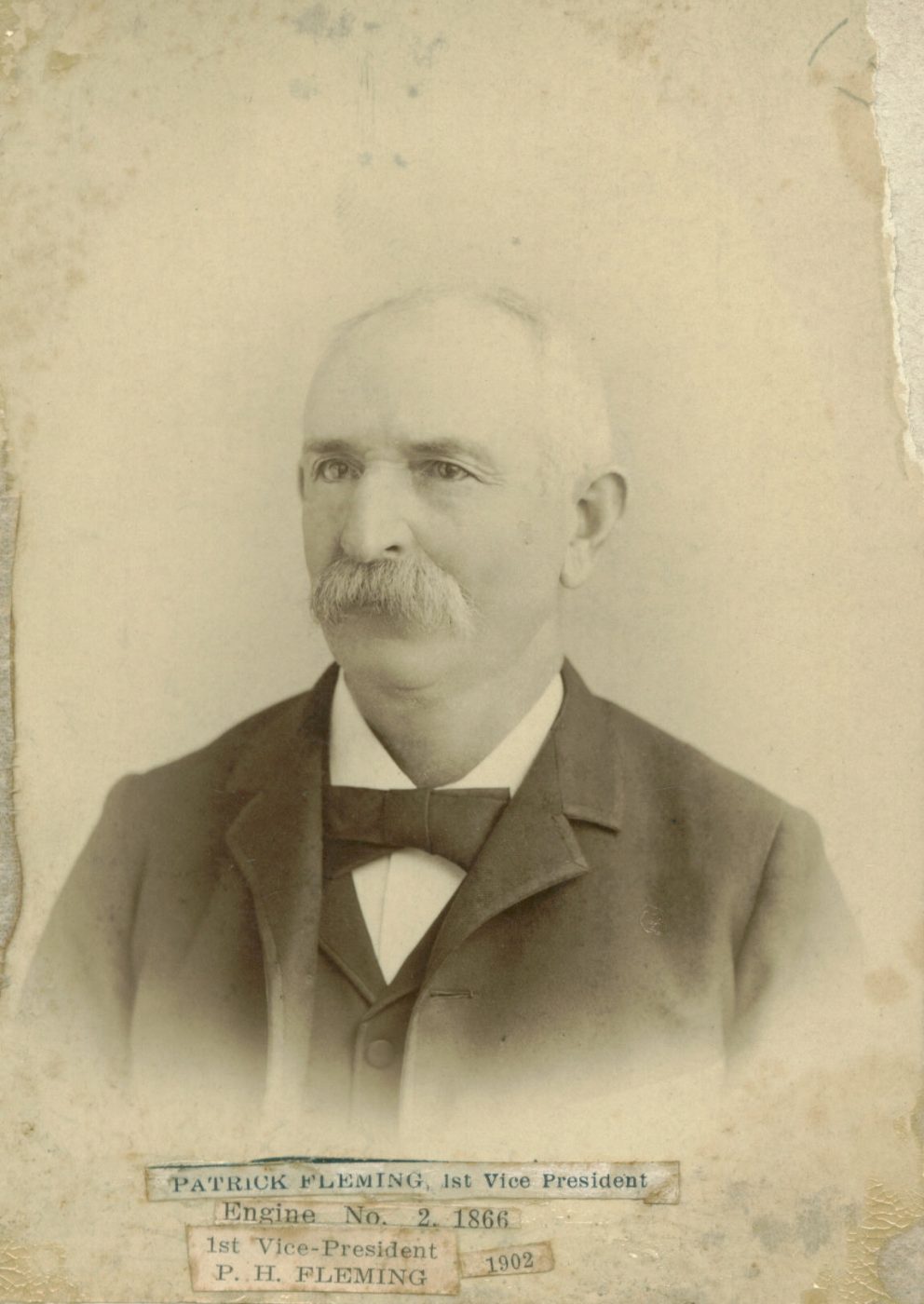
Patrick H. Fleming, Engine Company No. 2
Patrick H. Fleming, Engine Co. No. 2. Joined in 1866, the department's first year.
Tom Sawyer
Tom Sawyer. Volunteer veteran and the paid department's first Corporation Yard Keeper.
1870s

Chief Scannell's department

Charles H. Ackerson 1870–1871David Scannell 1871–1873Franklin E. R. Whitney 1873David Scannell 1874–1893

In 1871 David Scannell, the last volunteer chief, took command of the paid department. Apart from a few months in 1873, he would lead it for more than two decades.

As the city spread into new neighborhoods, new companies followed, from Engine Company No. 7 to Truck Company No. 3, each with its steamer or ladder truck, its horses and its crew of regular and call men.

On August 24, 1875, fire broke out in the Murphy, Grant & Company building at Bush and Sansome Streets, one of the largest dry goods houses on the coast. While the engines fought the flames, the Fire Patrol spread 304 waterproof covers over merchandise on the floors below to save it from water damage.

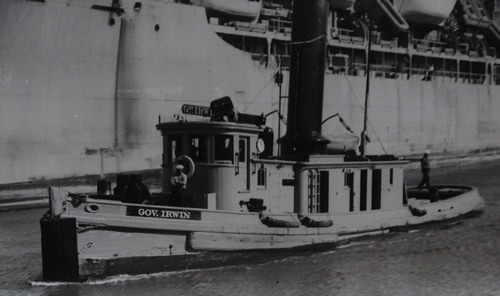
By 1878 the department counted 276 regular members, 201 call men, 62 horses and 1,247 hydrants, and the department took to the water. In July 1878 the steam tug Governor Irwin went into service at the Broadway Wharf as the first fireboat, its pumps able to throw as much water as several land steamers onto burning wharves and ships.

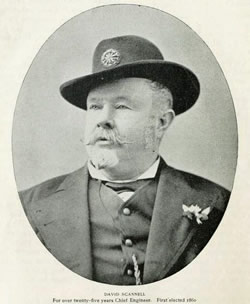
Chief David Scannell
Chief David Scannell. Chief of Department 1871–1873 and 1874–1893.
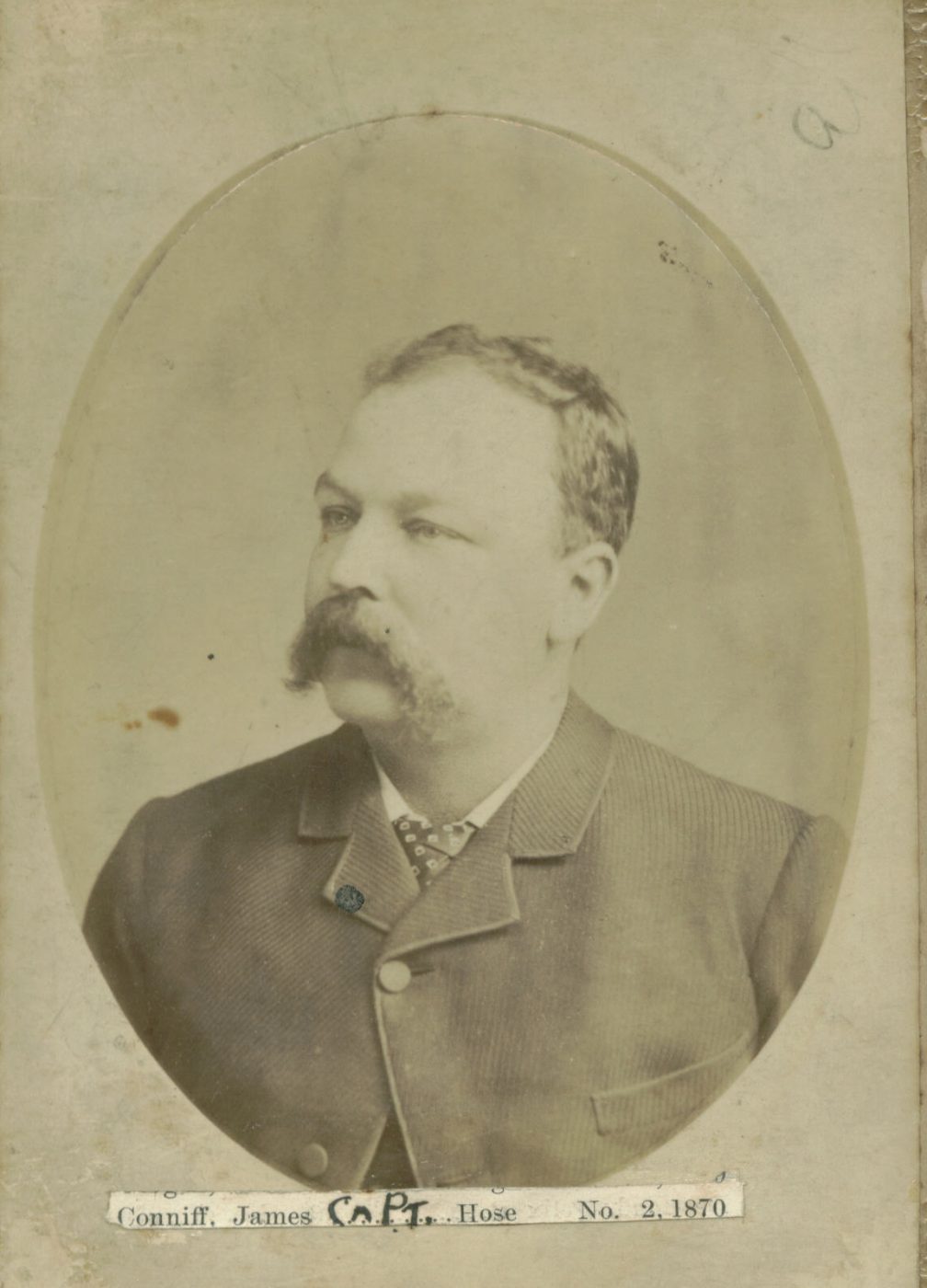
Captain James Conniff, Hose Company No. 2
Capt. James Conniff, Hose Co. No. 2. Joined 1870.
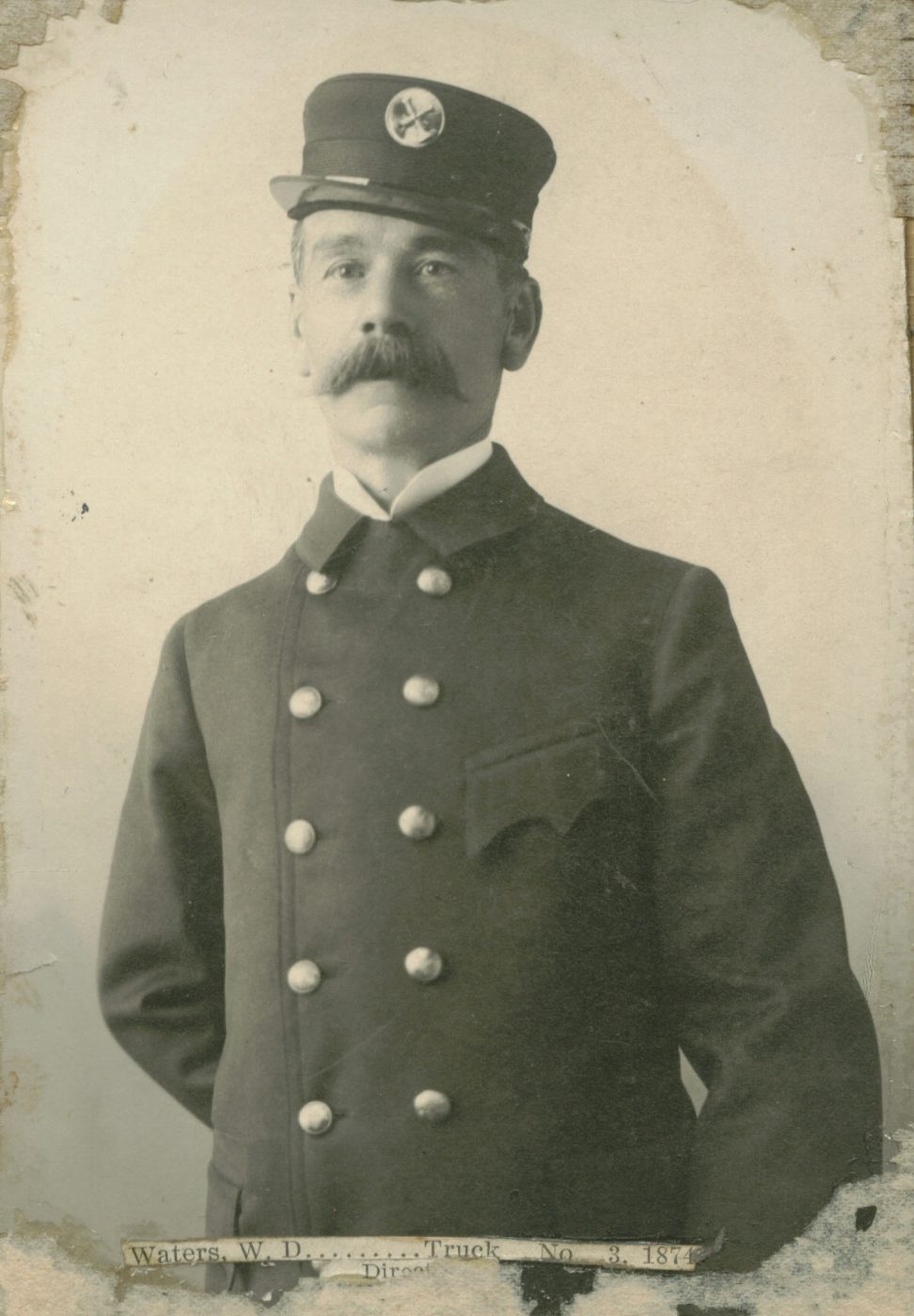
W. D. Waters, Truck Company No. 3
W. D. Waters, Truck Co. No. 3. Joined 1874.
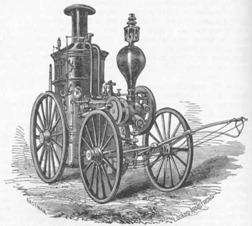
Period engraving of a horse-drawn steam fire engine
The steam fire engine. A period engraving of a steamer like those the department ran in its first decades.
The fireboat Governor Irwin
Fireboat Governor Irwin. The steam tug that became the department's first fireboat in 1878.
1880s

A growing city

Chief David Scannell 1874–1893

San Francisco was now the largest city in the West, and its downtown kept climbing. Grand hotels, newspaper offices and printing plants packed the blocks around Market Street, full of paper, ink and gas lighting. Every new building was a new risk.

The department grew with it, company by company. Steamers, hose wagons and ladder trucks lived in neighborhood engine houses with their horses stabled behind, ready to roll at the clang of the alarm gong. Firemen worked long stretches on duty with little time off, living in the firehouse alongside their teams.

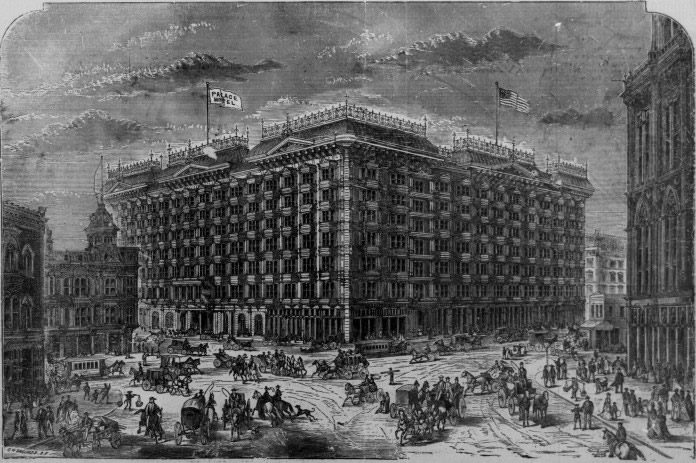
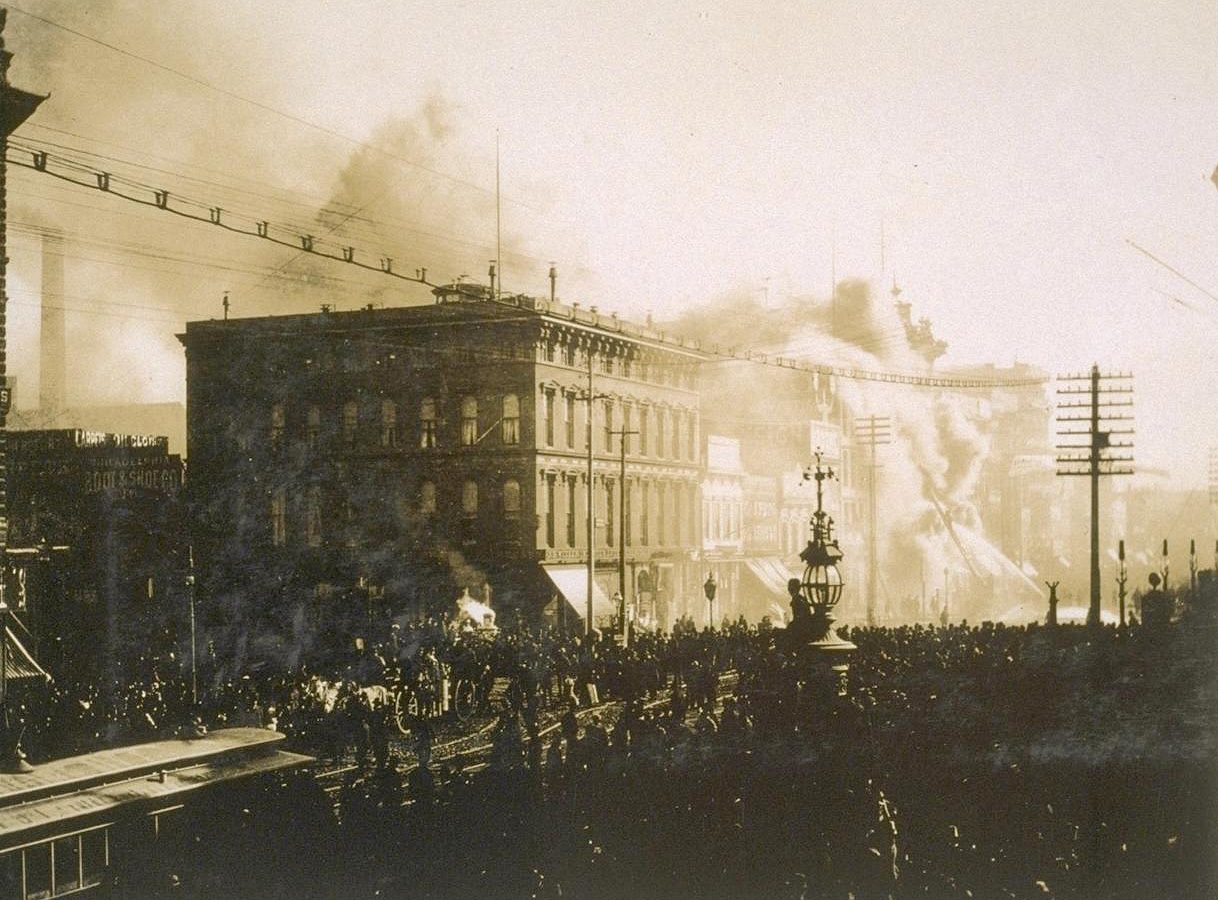
Big downtown fires tested them. Fires at the Palace Hotel in 1883 and the Bancroft printing house in 1886 showed how quickly flames could spread through the city's crowded commercial blocks, a warning that would echo in 1906.

The waterfront had its own protector. Teamed with Hose Company No. 9 at the Broadway Wharf, the Governor Irwin pumped Bay water into hose lines ashore, and in September 1888 its streams helped stop a general-alarm fire that threatened the wooden wharves and sailing ships between Mission and Howard Streets.

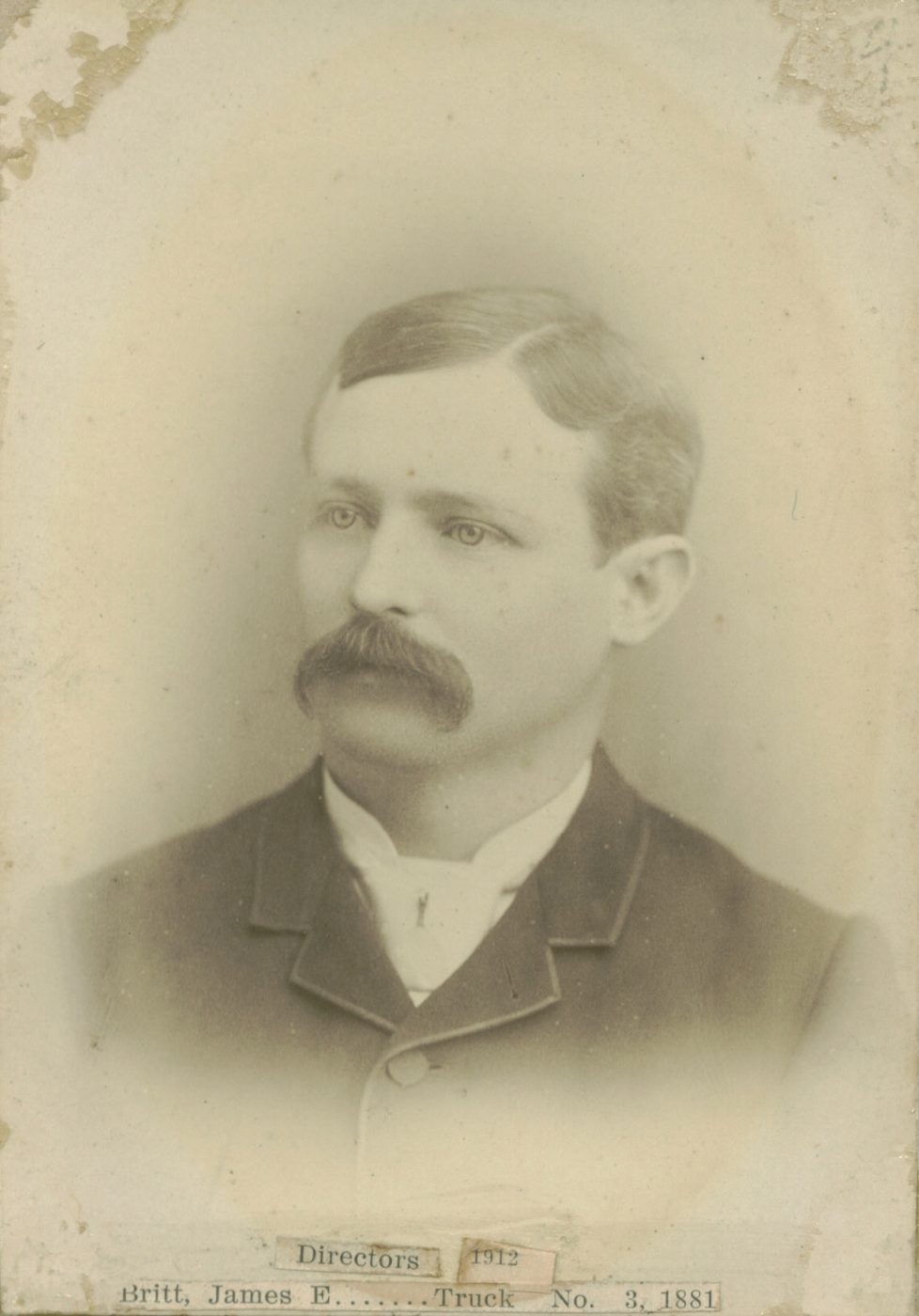
James E. Britt, Truck Company No. 3
James E. Britt, Truck Co. No. 3. Joined 1881.
1883 Palace Hotel fire
1883. Fire at the Palace Hotel.
1886 Bancroft Printing Company fire
1886. The Bancroft Printing Company fire.
1890s

New tools, new leadership

David Scannell to 1893Dennis T. Sullivan 1893–1906

New apparatus arrived quickly. Chemical Engine Company No. 1 was organized on May 17, 1890, carrying tanks that could knock down small fires before a steamer even got to work. On July 1, 1891, the department's first water tower went into service, able to throw a heavy stream into the upper floors of tall buildings.

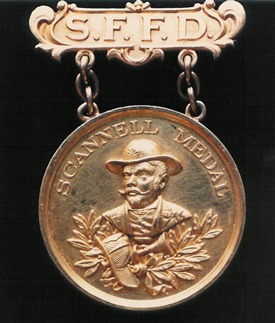
On March 30, 1893, Chief Scannell died in office. His will funded the Scannell Medal, still awarded for bravery. His successor, Dennis T. Sullivan, was a reformer who pressed the city to end the call-man system and pay every firefighter full time, and who warned for years that the city's water supply could fail in a great disaster.

In 1895 San Francisco began one of the nation's earliest municipal ambulance services, with a horse-drawn ambulance, the start of the emergency medical service the Fire Department runs today. That same year a second fireboat, the Governor Markham, joined the waterfront fleet.

Chief Dennis T. Sullivan in the 1892 chief's buggy
Chief Dennis T. Sullivan in the 1892 chief's buggy, now in the museum.
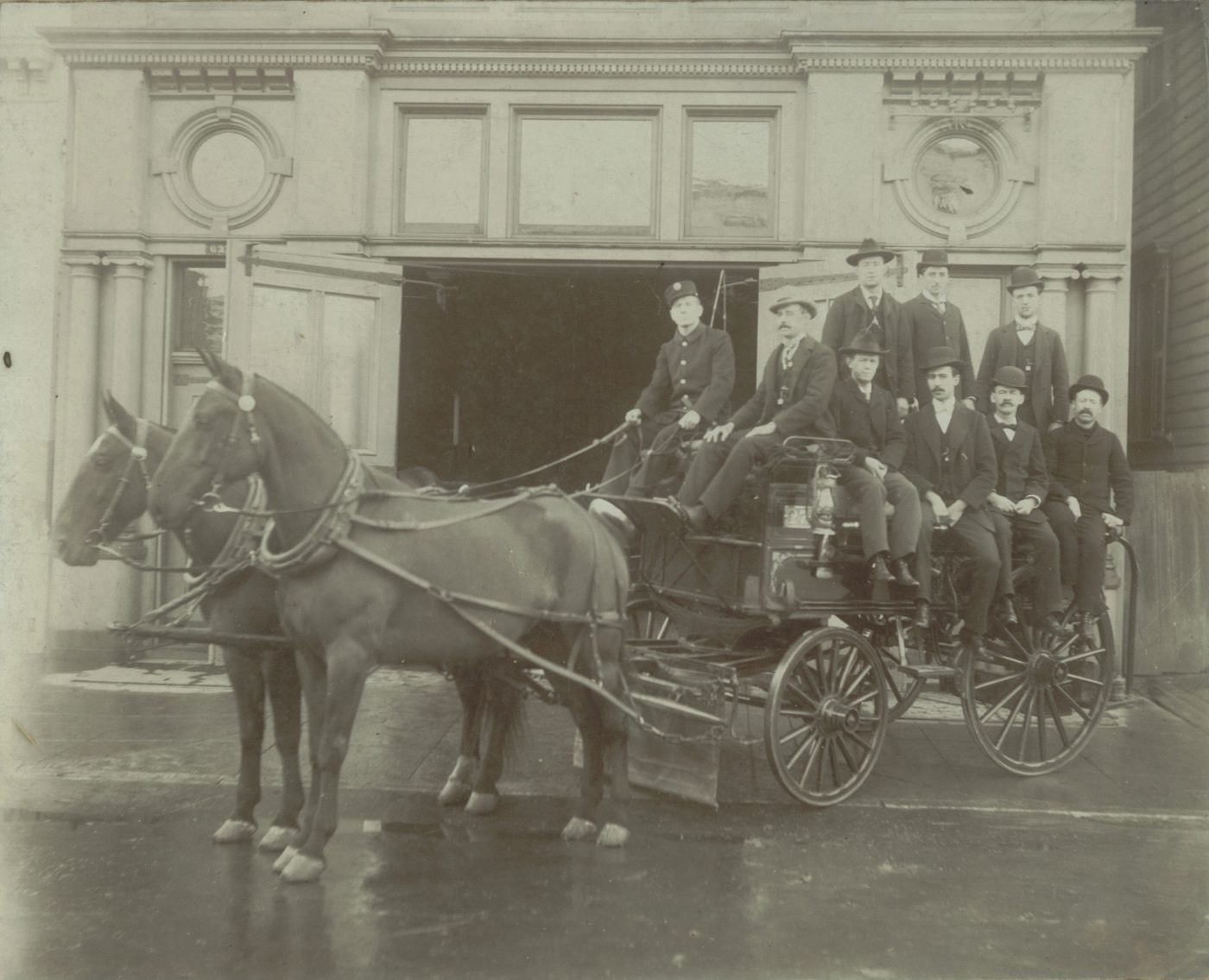
Hose Company No. 27, December 1899
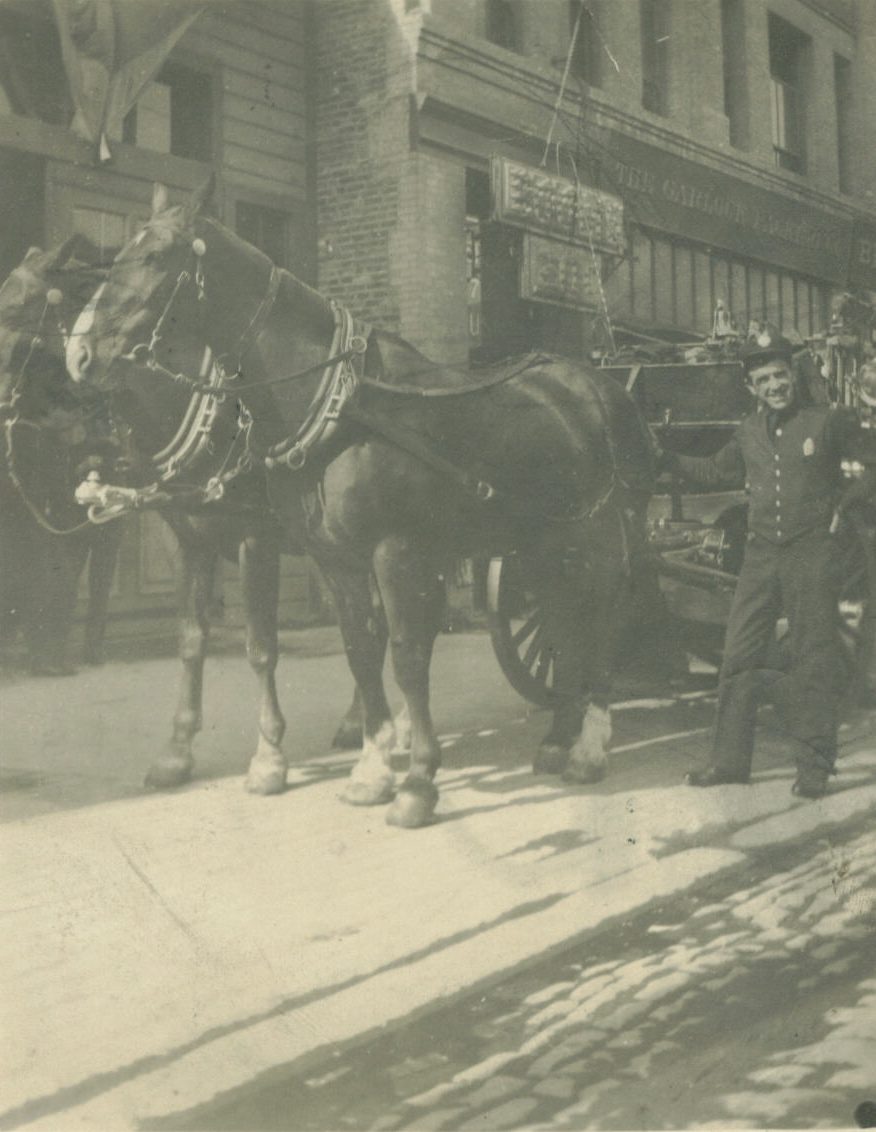
December 1899. Hose Company No. 27 and its team.
Exempt Big Six in Los Angeles, 1894
1894. The Exempt “Big Six” on parade in Los Angeles.
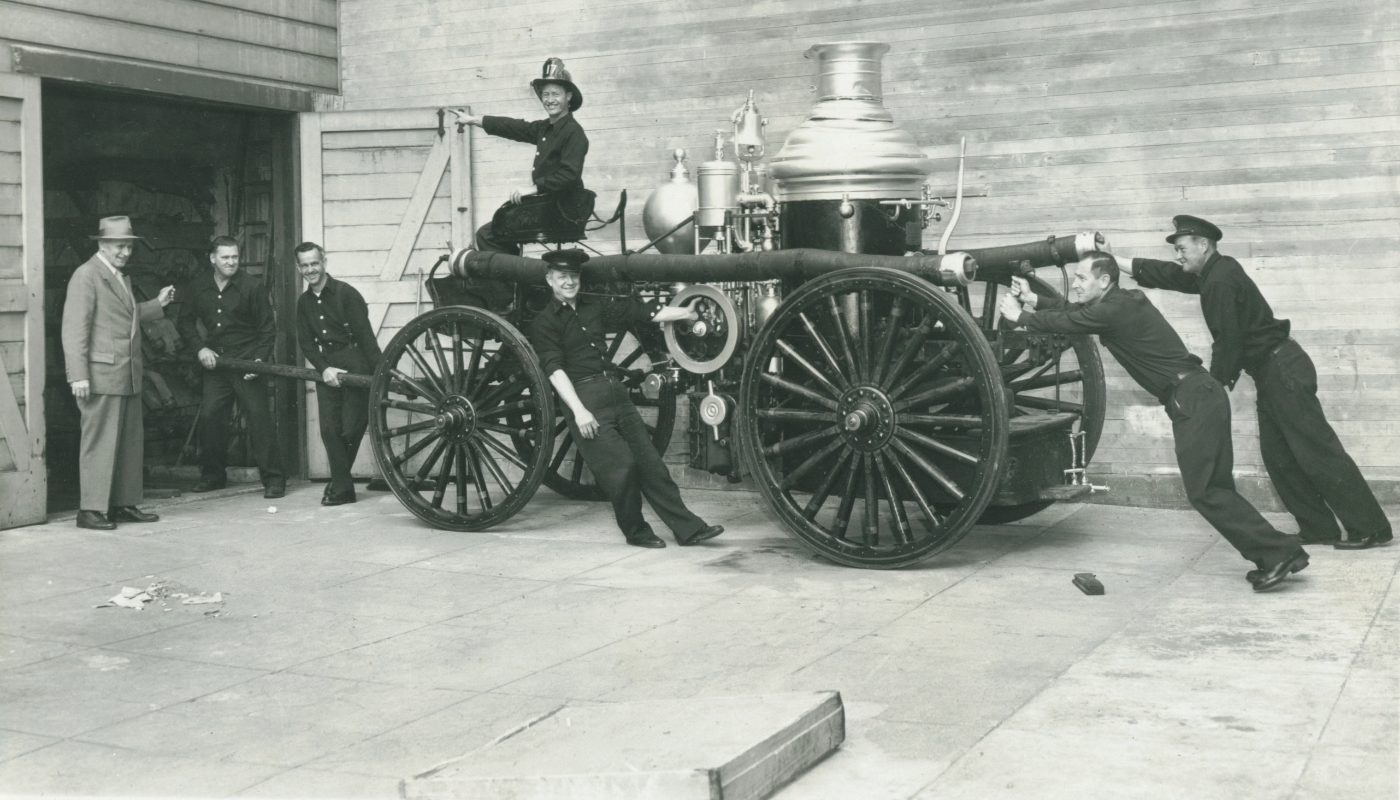
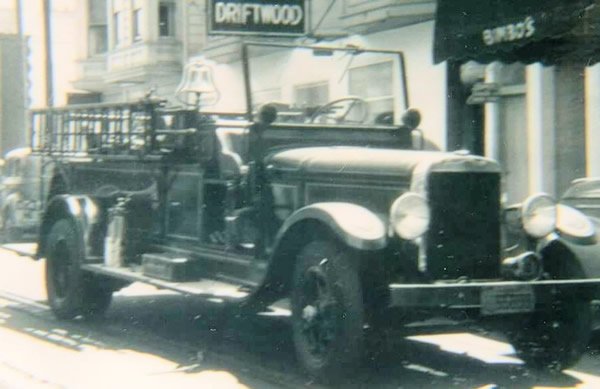
1897 LaFrance steam engine
1897 LaFrance steamer. Shown years later with firefighters of a later generation.

From the museum collection

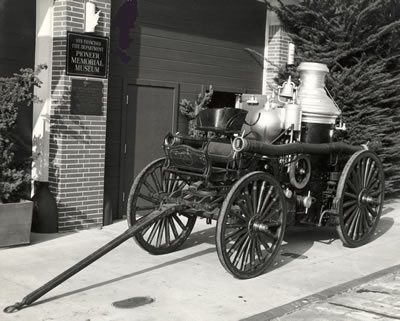
1893 LaFrance steamer, Engine Co. No. 22
1893 LaFrance steamer, Engine Co. No. 22.
1897 Truckson LaFrance steamer, Engine Co. No. 26
1897 Truckson LaFrance steamer, Engine Co. No. 26.
The Scannell Medal, bearing Chief Scannell's portrait
The Scannell Medal. Bearing the chief's portrait, it was funded by his will and is still awarded for bravery.
1900s

1906: the city burns, the department rebuilds

Dennis T. Sullivan to 1906John H. Dougherty acting, 1906Patrick H. Shaughnessy 1906–1910

Chief Sullivan won his first battle on January 8, 1900, when a new City Charter made the department fully paid. In February 1903 firefighters began to be hired through civil service examinations rather than political favor.

April 18, 1906

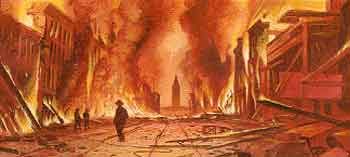
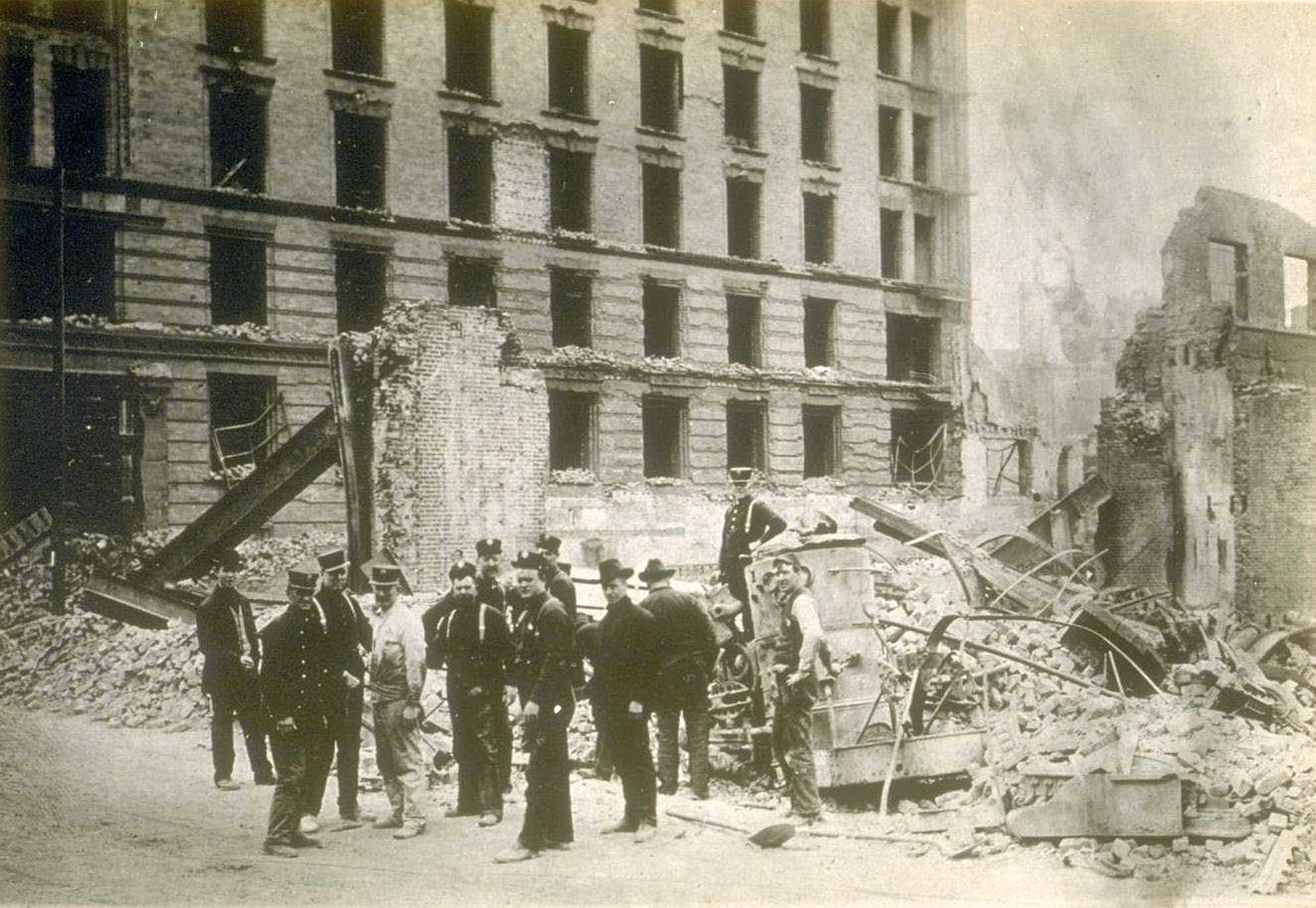
At 5:12 in the morning the earthquake struck. It broke the water mains that fed the hydrants and wrecked the alarm system: 556 of its 600 batteries were destroyed. Chief Sullivan was mortally injured when the chimney of the California Hotel crashed through his quarters. About 52 separate fires grew together and burned for three days.

Without water, firefighters drafted from cisterns, sewers and the Bay, and fought building by building alongside soldiers and citizens. The Governor Irwin pumped Bay water ashore, and in the Mission a single hydrant at 20th and Church Streets kept flowing and helped save the neighborhood. Painted gold every April 18, it is still known as the Golden Hydrant. When the fires were out, about 4.7 square miles and some 28,000 buildings were gone. Acting Chief John H. Dougherty led the department through the fire, and on June 15, 1906, Patrick H. Shaughnessy became chief and began to rebuild it. New firehouses rose across the city, among them the Beaux-Arts quarters of Engine Company No. 2 on Bush Street, finished in 1908.

The city vowed it would never again be left without water. Voters approved $5.2 million for an Auxiliary Water Supply System, and in 1909 the fireboats David Scannell and Dennis T. Sullivan, named for the two great chiefs, entered service to pump Bay water into the new high-pressure mains.

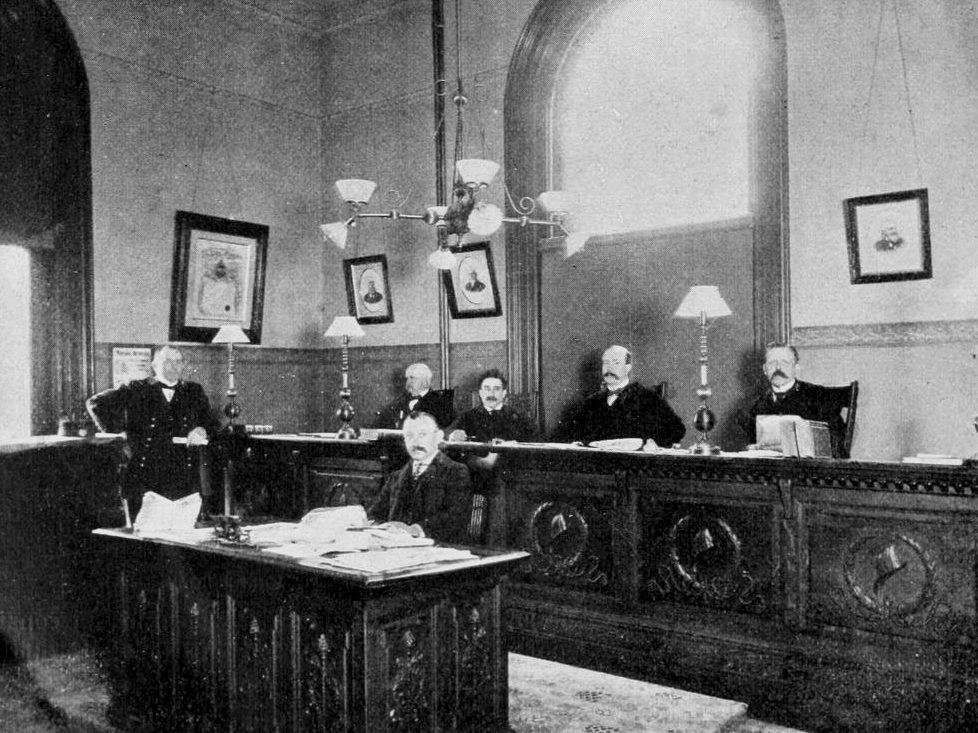
Chief Dennis T. Sullivan at a Fire Commission meeting, 1900
1900. Chief Dennis T. Sullivan, standing, at a Fire Commission meeting.
San Francisco burning, April 18, 1906
April 18, 1906. The city burning after the earthquake.
Firemen at a destroyed engine, Post and Kearny, 1906
1906. Members at a destroyed engine, Post & Kearny.
Battery company, 1909
1909. A battery company and its horses.
1910s

Horses give way to motors

Thomas R. Murphy 1910–1929

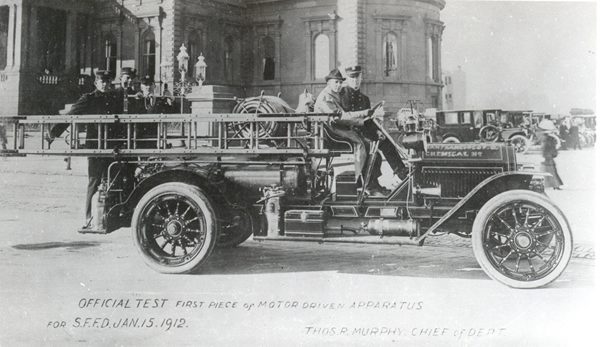
Chief Thomas R. Murphy led the department into the motor age. On July 11, 1912, the city held a head-to-head test: a motor engine had water flowing in 3 minutes 40 seconds, while the best horse-drawn rig took 5 minutes 6 seconds. Chemical Company No. 3 received the first motor apparatus, and in 1913 Engine 28 got the first motor-driven steamer.

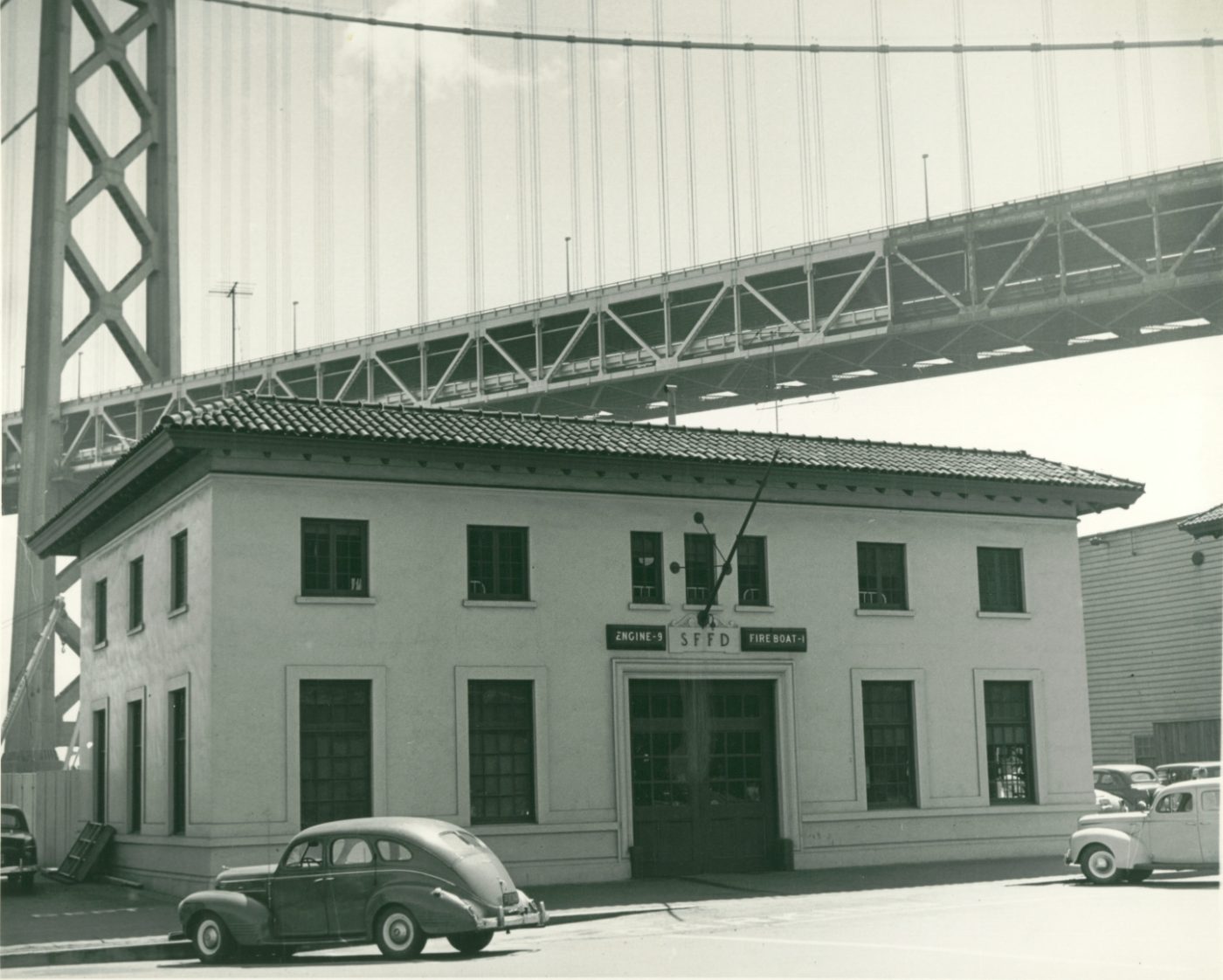
The high-pressure water system was completed in 1913, with a reservoir on Twin Peaks, tanks on Jones and Clayton Streets, two saltwater pumping stations and underground cisterns at intersections across the city. It was turned over to the Fire Department in January 1914. A new Central Fire Alarm Station opened in 1915 at Turk and Octavia. That same year the world came to the Panama-Pacific International Exposition, and the department kept total fire losses at the fair under $250. Also in 1915, the fireboat station at Pier 22½ was built, the home of Station 35 for more than a century.

On August 15, 1918, the two-platoon system began, giving firefighters regular time at home with their families for the first time.

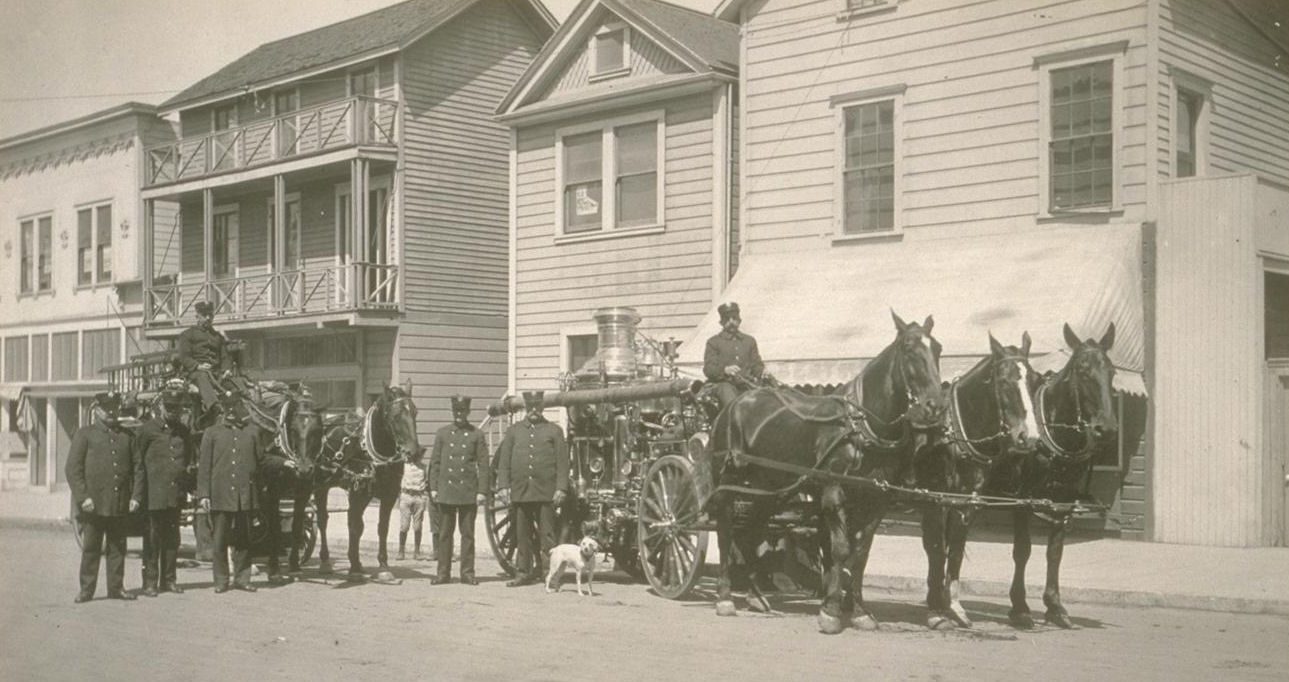
Engine Company No. 24 with horses, 1910
1910. Engine Co. No. 24 and its team.
1912 American LaFrance chemical engine
1912 American LaFrance chemical engine. The motor age arrives.
Engine Company No. 20 with horses, 1917
1917. Engine Co. No. 20 and its horses, among the last teams in service.
1920s

Fully motorized

Thomas R. Murphy to 1929Charles J. Brennan 1929–1943

In June 1920 the department created its Bureau of Fire Prevention and Public Safety, shifting part of its mission from fighting fires to stopping them before they started through inspections and building rules.

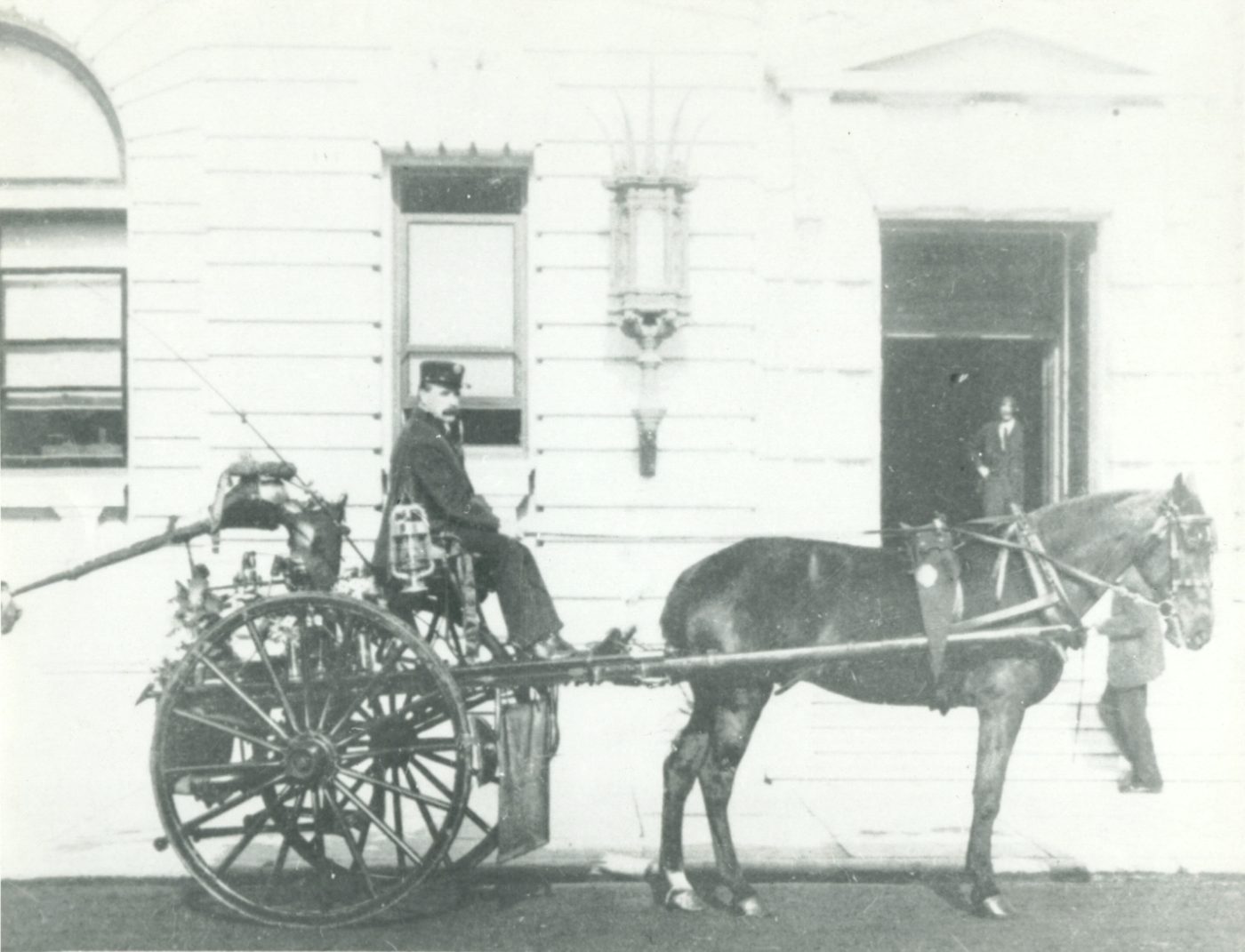
In August 1921 the horse era ended. On August 19, 1921, exactly 58 years after horses first pulled San Francisco apparatus, Engine Company No. 6 answered the last alarm with a horse-drawn engine and was motorized an hour later. On August 29 the last five horses left the quarters of Engine Company No. 33 in Oceanview, and the department was fully motorized. Retired fire horses spent their last years on pension at the department's farm.

Chief Murphy died in office in 1929, after nineteen years in command, and Charles J. Brennan succeeded him.

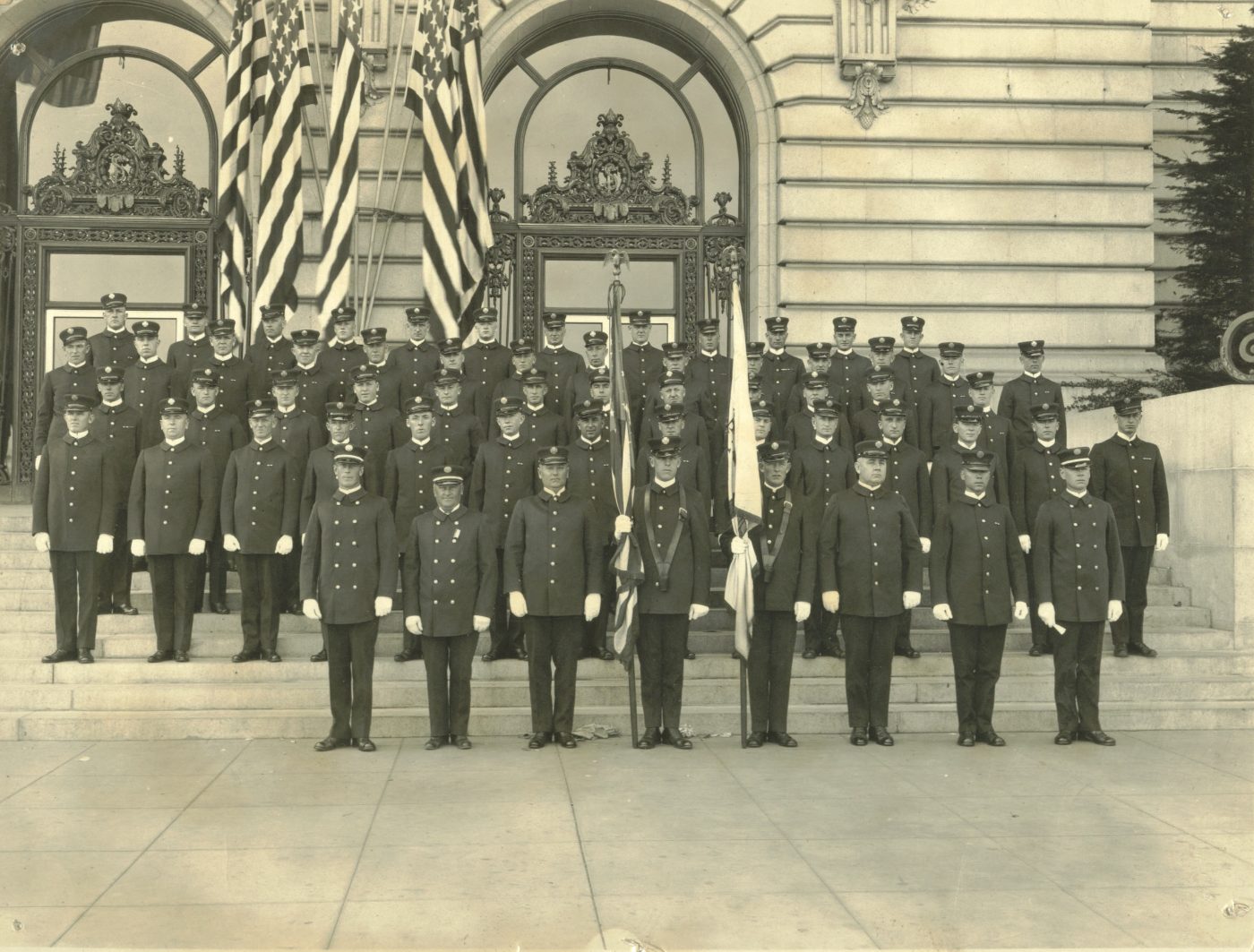
Department drill team, 1924
1924. The department drill team.
Engine Company No. 2, 1925
1925. Engine Co. No. 2.
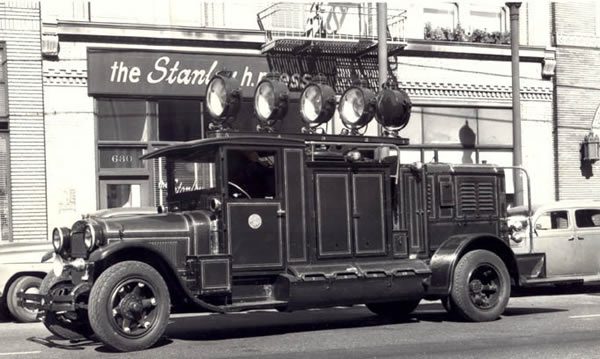
1928 Kleiber light wagon
1928 Kleiber light wagon.
1930s

Bridges, a World's Fair and a new charter

Charles J. Brennan 1929–1943

The 1932 City Charter reorganized city government and set the framework the department would work under for decades. Through the Depression, Chief Brennan kept companies staffed and apparatus in service, while salvage crews worked to protect homes and businesses from smoke and water once the fire was out.

Lillie Coit's gifts to the city

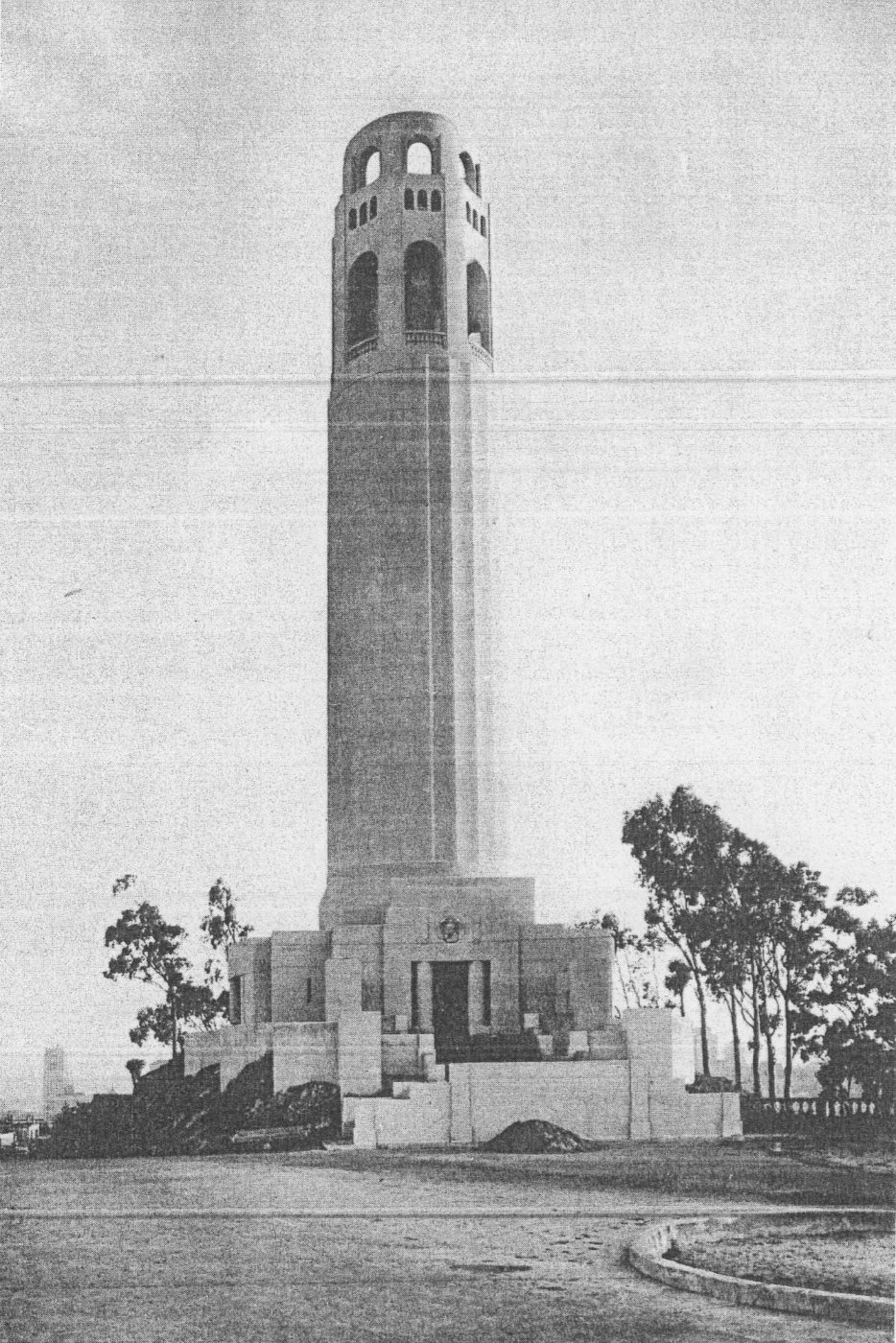
Lillie Hitchcock Coit's bequest paid for two landmarks that opened in 1933. On October 8, Coit Tower was dedicated atop Telegraph Hill, the same hill where she had helped Knickerbocker No. 5 to a fire as a girl. Its 210-foot column still looks out over the city and the Bay.

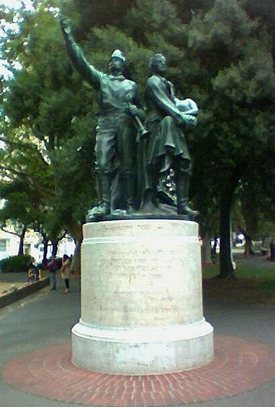
Her second gift was meant for the volunteers themselves. Sculptor Haig Patigian's bronze Volunteer Firemen Memorial, three firefighters, one carrying a rescued woman in his arms, was unveiled in Washington Square in North Beach on December 3, 1933, the department's 67th anniversary. Its base reads: “To commemorate the Volunteer Fire Department of San Francisco, 1849–1866. Erected 1933 by bequest of Lillie Hitchcock Coit.”

As the Bay Bridge (1936) and Golden Gate Bridge (1937) rose, the city's reach and its risks grew with them. On the waterfront, First Assistant Chief Albert J. Sullivan developed nozzles and tools in 1938 for attacking stubborn fires in the creosote-soaked timbers under the Embarcadero piers, and Battalion Chief Frederick J. Bowlen began compiling the department's history volume by volume, records that still underpin the museum's work.

When the Golden Gate International Exposition opened on Treasure Island in 1939, the department staffed fire protection for the World's Fair through 1940.

Coit Tower on Telegraph Hill, 1933
1933. Coit Tower, newly built on Telegraph Hill with Lillie Coit's bequest.
Volunteer Firemen Memorial statue in Washington Square
Volunteer Firemen Memorial, Washington Square. Haig Patigian's bronze, unveiled December 3, 1933.
1930 REO salvage company apparatus
1930 REO salvage unit. Salvage crews protected homes and businesses from water and smoke damage.
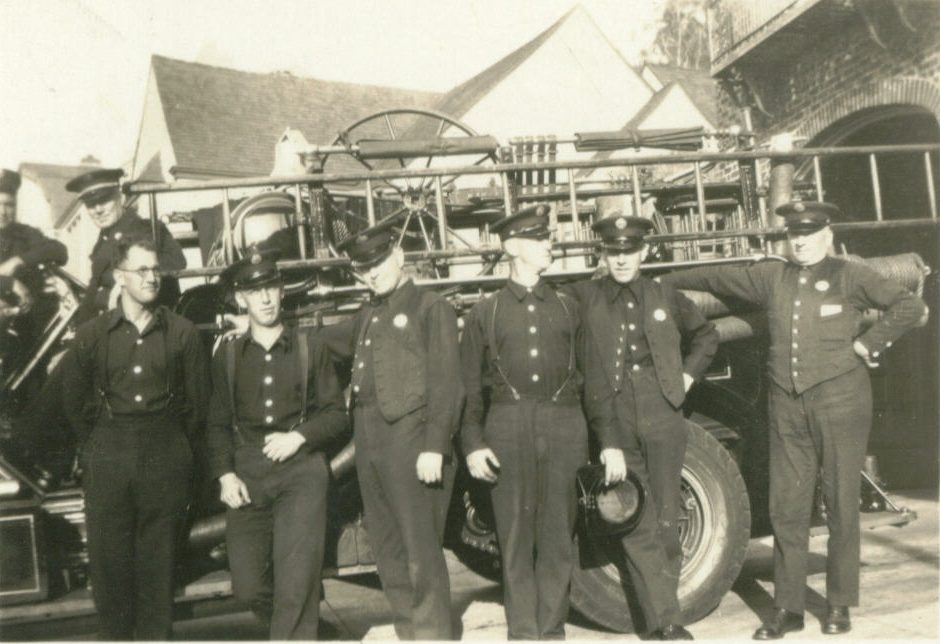
Engine Company No. 5 crew, April 1933
April 1933. Engine Co. No. 5.
Albert J. Sullivan, 1938
Albert J. Sullivan, 1938. He became Chief of Department in 1943.
1939 International salvage truck
1939 International salvage truck.
1940s

Wartime service, and a tragic loss

Charles J. Brennan to 1943Albert J. Sullivan 1943–1948Edward P. Walsh 1948–1953

World War II turned San Francisco into the gateway to the Pacific, and its piers, shipyards and warehouses into targets. With many firefighters in uniform overseas, the department trained thousands of Civil Defense Auxiliary firemen to protect the port, shipyards and neighborhoods. Civil defense apparatus joined the fleet, including a 1942 Chevrolet that later became Coffee Unit No. 1, bringing hot coffee and a moment's rest to firefighters at major fires for decades.

On March 28, 1944, an arsonist set fire to the New Amsterdam Hotel on Fourth Street. Crews made ladder and life-net rescues, but it was the deadliest fire in the city since 1906, and it led to tougher rules for the city's residential hotels.

The Herbert Hotel fire

Early on July 30, 1946, fire swept the Herbert Hotel at 161 Powell Street. It went to five alarms and brought about 185 firefighters to the scene. Four of them did not come home.

In memory of Lt. John Borman, Firefighter Albert Hudson, Walter V. Elvitsky and Charles P. Lynch, killed at the Herbert Hotel fire, July 30, 1946.

In 1948 the department created the rank of Deputy Chief and put a two-way radio channel into service, so chiefs could command companies on the move instead of by runner and telephone. And in December 1949 a handful of firefighters began repairing broken toys and bicycles for 15 families in need, the start of the San Francisco Firefighters Toy Program, now the nation's oldest program of its kind.

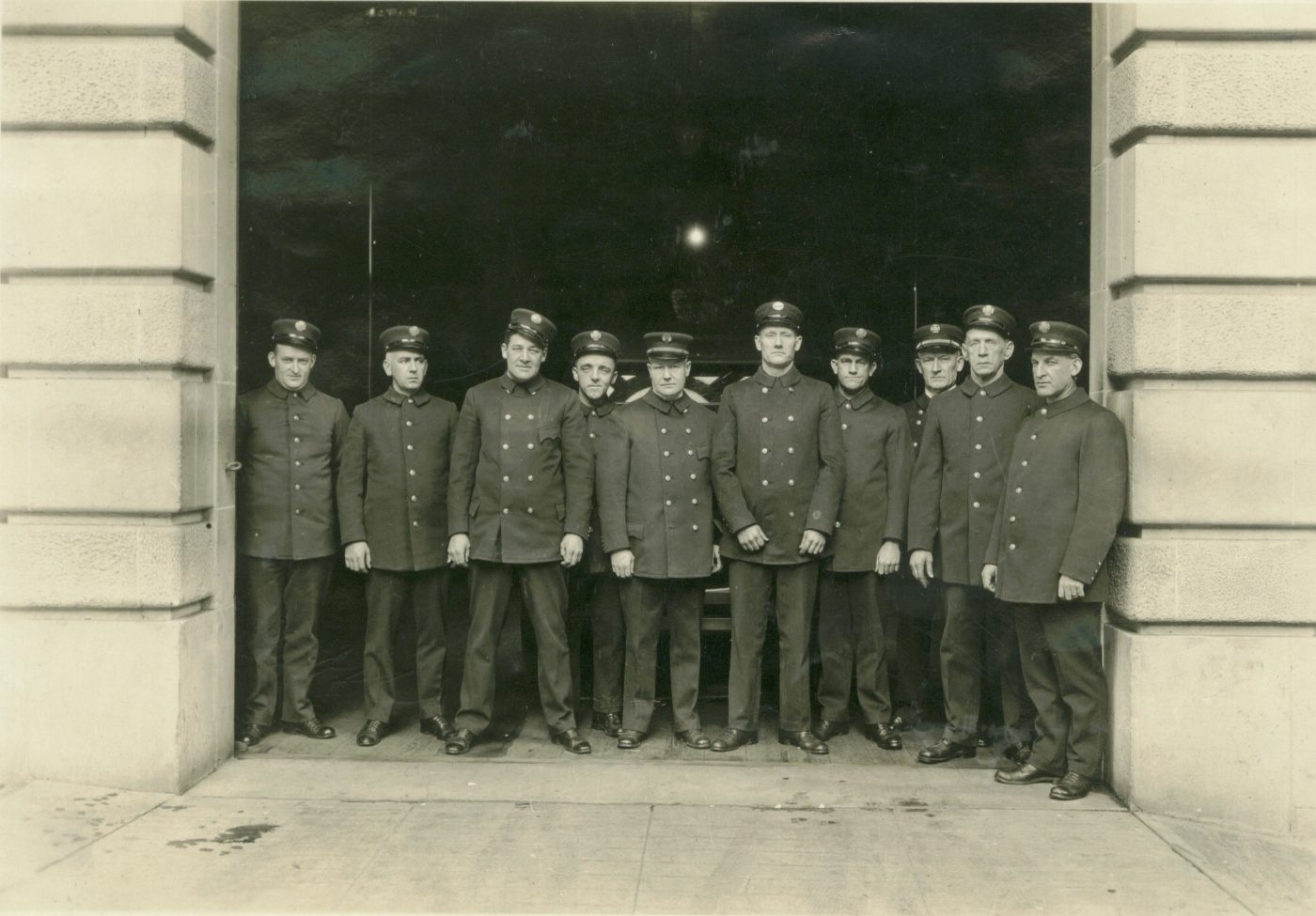
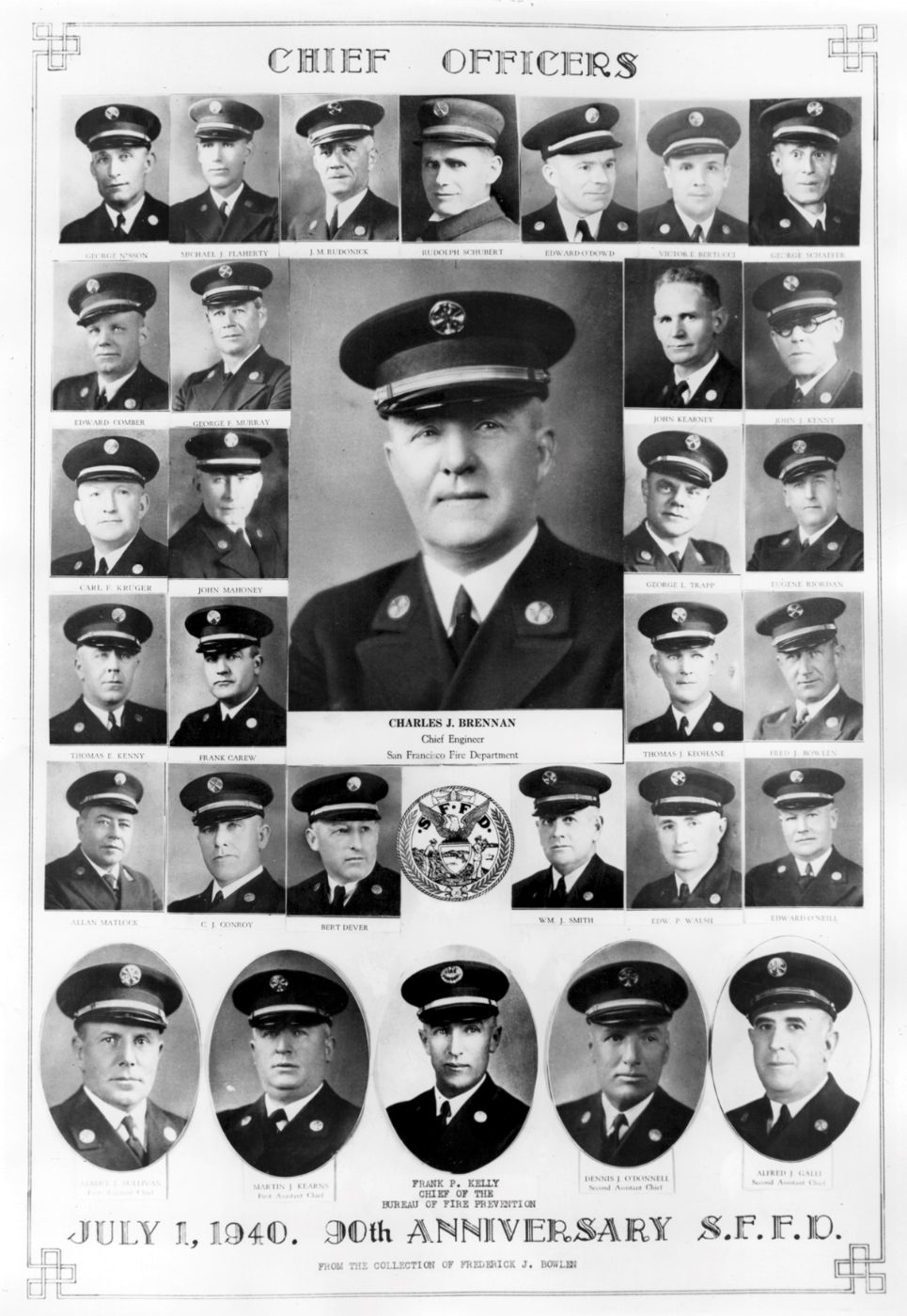
Chief Brennan and chief officers, 1940
1940. Chief Charles J. Brennan and his chief officers.
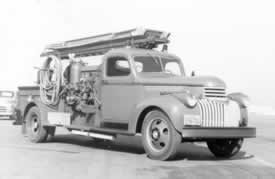
1942 Chevrolet auxiliary, Coffee Unit No. 1
1942 Chevrolet, later Coffee Unit No. 1. Help restore it →
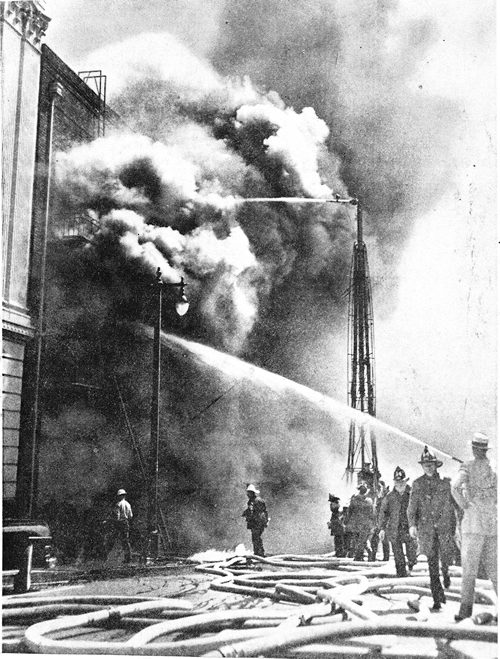
1948 fire on Bush Street
1948. Water tower at a Bush Street fire.
1950s

A modern department

Edward P. Walsh to 1953Francis P. Kelly 1953–1956William F. Murray 1956–1971

In 1952 voters approved a $4.75 million bond to replace aging firehouses and apparatus. Two landmarks followed in 1954: a new Training Center at Folsom and 19th Streets, where every recruit since has learned the job, and the fireboat Phoenix, which went into service as the old fireboats of 1909 were retired.

On March 12, 1956, firefighters moved to 24-hour shifts, the schedule the department still works today, and from 1958 new triple-combination pumpers carried pump, hose and water tank on a single rig.

Breaking the first color barrier

For nearly a century after 1866, hiring and testing barriers kept the department almost entirely white and exclusively male. In 1955 Earl Gage Jr. broke the racial barrier as the department's first African American firefighter. For twelve years he was its only Black member, and through 28 years of service he pushed to open the ranks to others, among them a future chief, Robert Demmons.

1950 Mack salvage truck
1950 Mack salvage truck.
Pier 22 1/2 fireboat station, 1951
1951. The fireboat station at Pier 22½.
Fireboat Phoenix
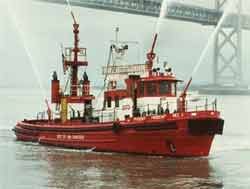
Fireboat Phoenix. In service since 1954.
1960s

A museum for the department

Chief William F. Murray 1956–1971

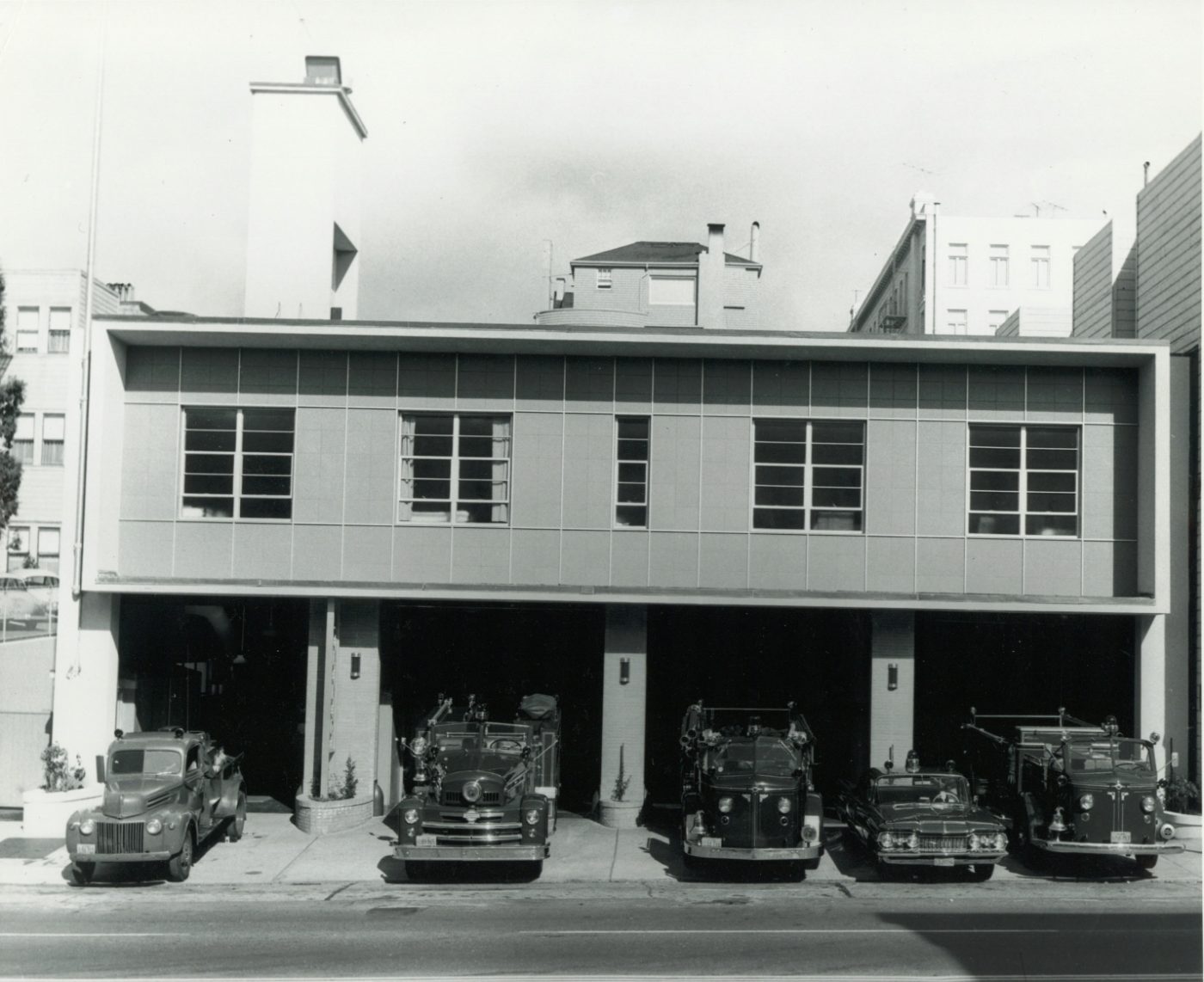
As the city rebuilt its neighborhoods and freeways, the department replaced firehouses that dated to the horse era with modern stations built for motor apparatus.

Early on January 6, 1961, fire raced up the open central stairway of the Thomas Hotel on Mission Street. The tragedy led San Francisco to require enclosed stairways and fire doors in older residential hotels, one of the department's most important fire-prevention reforms.

In October 1964 the Pioneer Memorial Museum opened at 655 Presidio Avenue, giving the department's engines, helmets, badges and records a permanent home. Today it is the San Francisco First Responder Museum & Safety Learning Center, cared for by Guardians of the City.

On April 18, 1967, the anniversary of the 1906 earthquake, the department dedicated its new headquarters at 260 Golden Gate Avenue.

In 1963 Wylie Low joined as the department's first Asian American firefighter. Despite the courage of these pioneers, minority representation stayed in the single digits: by 1970, only four of some 1,800 uniformed firefighters were Black. And on December 3, 1966, the San Francisco Fire Department celebrated its centennial, 100 years since it was organized.

Firehouse at 2150 California Street, 1960
1960. The new firehouse at 2150 California Street.
Engine 22 dedication, June 1962
June 1962. Dedication of Engine 22.
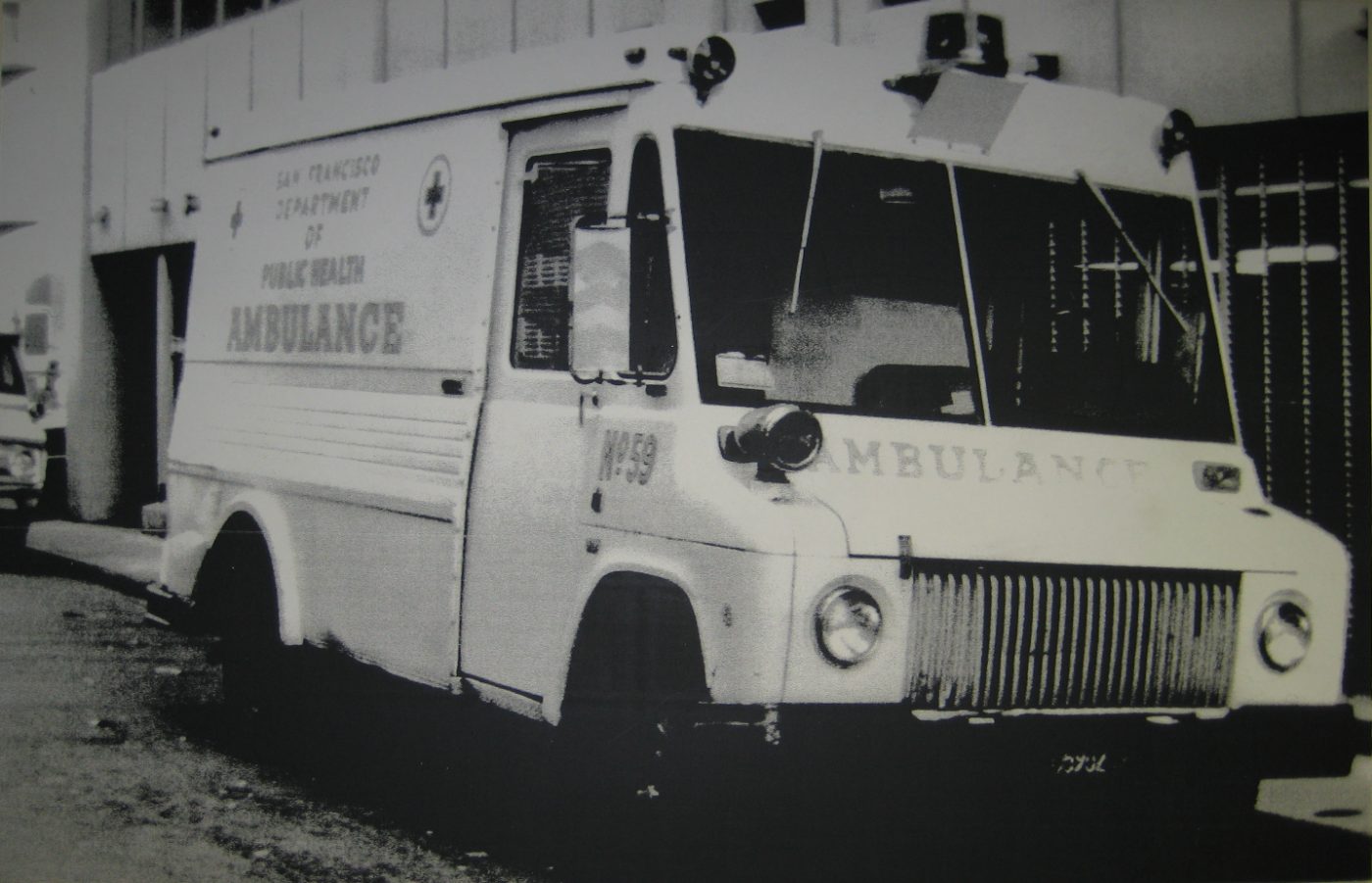
Ambulance of the 1960s
1960s. A city ambulance of the era.
1970s

Renumbered and rebuilt

Keith P. Calden 1971–1976Andrew C. Casper 1976–1982

A 1971 bond of $8.5 million upgraded the high-pressure water system, apparatus and communications. In 1973 and 1974 the department renumbered its stations into the system still used today, with Engines 1 through 44 and the fireboat.

Downtown was rising fast, and new high-rise buildings brought new firefighting procedures and requirements for sprinklers. Hollywood noticed too: San Francisco firefighters and apparatus appeared in the 1974 film The Towering Inferno.

Opening the doors

In 1970 the Western Addition Community Organization and the NAACP challenged the department's discriminatory entrance exams in federal court (WACO v. Alioto), and in 1972 Black firefighters organized the San Francisco Black Firefighters Association to support recruits and push for reform. A landmark November 1973 federal court order mandating one-for-one hiring of qualified minority and white applicants brought the first large-scale integrated recruit classes into the department's academy at 19th and Folsom Streets in early 1974. Despite heightened scrutiny in the academy and difficult conditions in the firehouses, these trailblazing recruits, among them future Chief of Department Robert L. Demmons, persevered and began transforming the department to better reflect the communities it serves.

In 1976 Asian American members founded the San Francisco Asian Firefighters Association, led by first president Ernie Lee, to fight workplace discrimination and strengthen outreach to non-English-speaking communities.

A golden tradition

The decade also gave the city one of its most beloved fire traditions. Beginning in 1969, Les “Doc” Bulloch, a dentist and historian, made a habit of slipping out before dawn each April 18 to paint the “Little Giant” hydrant at 20th and Church Streets gold, honoring the one hydrant that kept flowing in 1906 and helped save the Mission. Through the 1970s his quiet tribute grew into a public dawn ceremony, held right after the annual 5:12 a.m. gathering at Lotta's Fountain, where survivors of 1906 had once left messages for their families. Firefighters and their chiefs have taken part ever since, and the San Francisco History Association still leads the repainting every April 18.

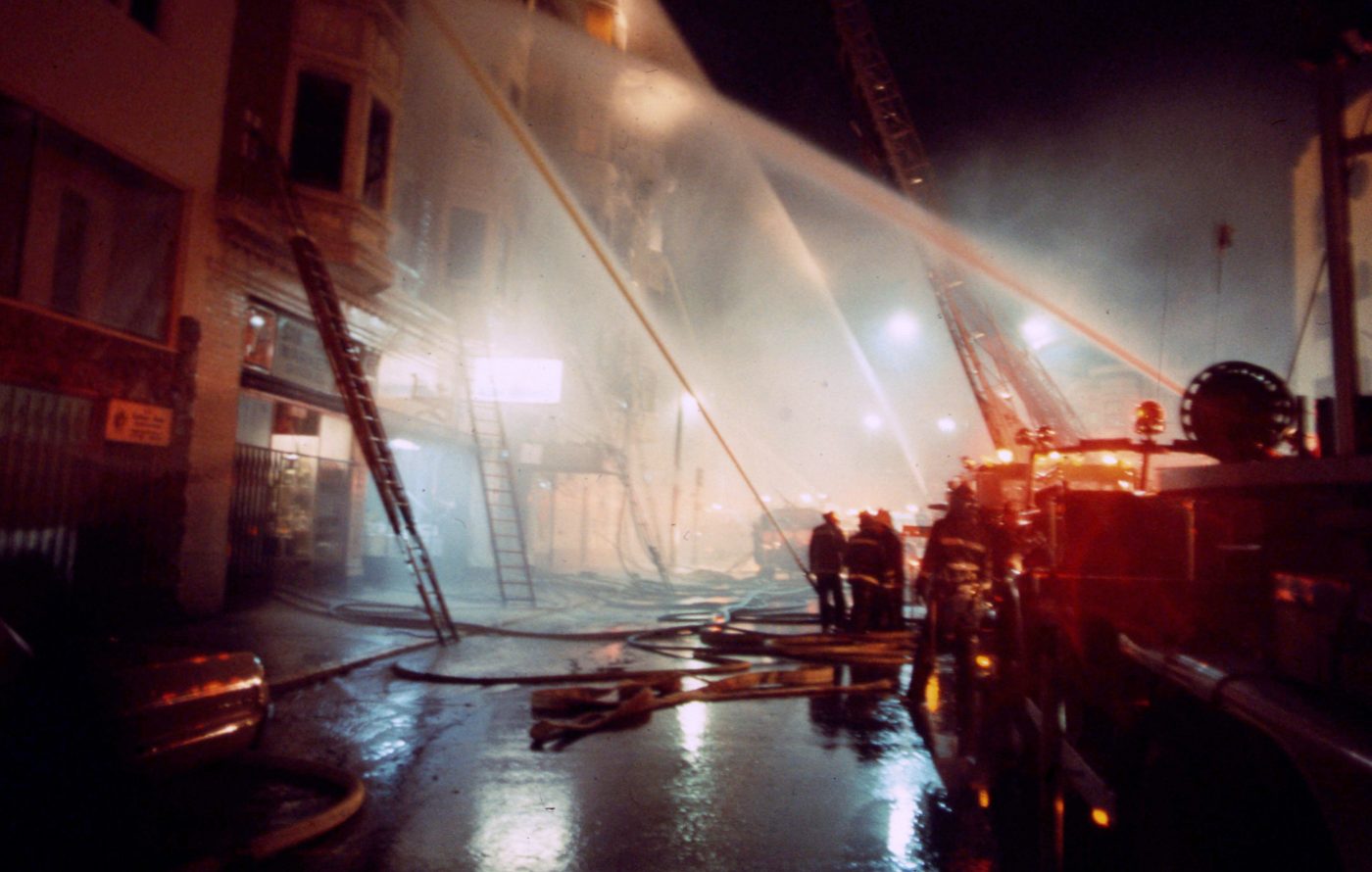
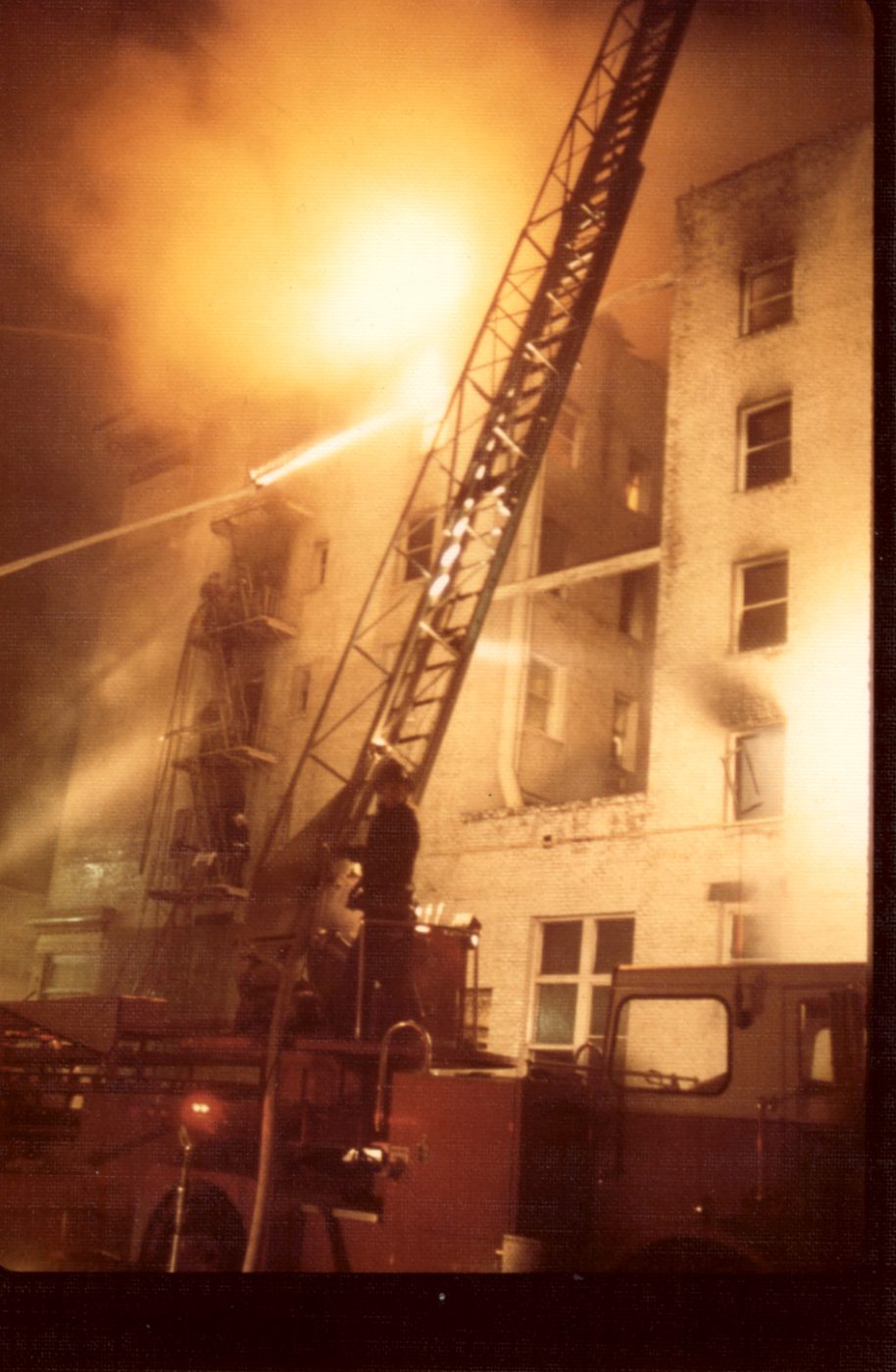
Before dawn on December 12, 1975, an arson fire swept the five-story Gartland Apartments at 16th and Valencia Streets. Chief Keith Calden commanded a five-alarm fight as walls collapsed, and no San Francisco fire since has required as many rescues by firefighters.

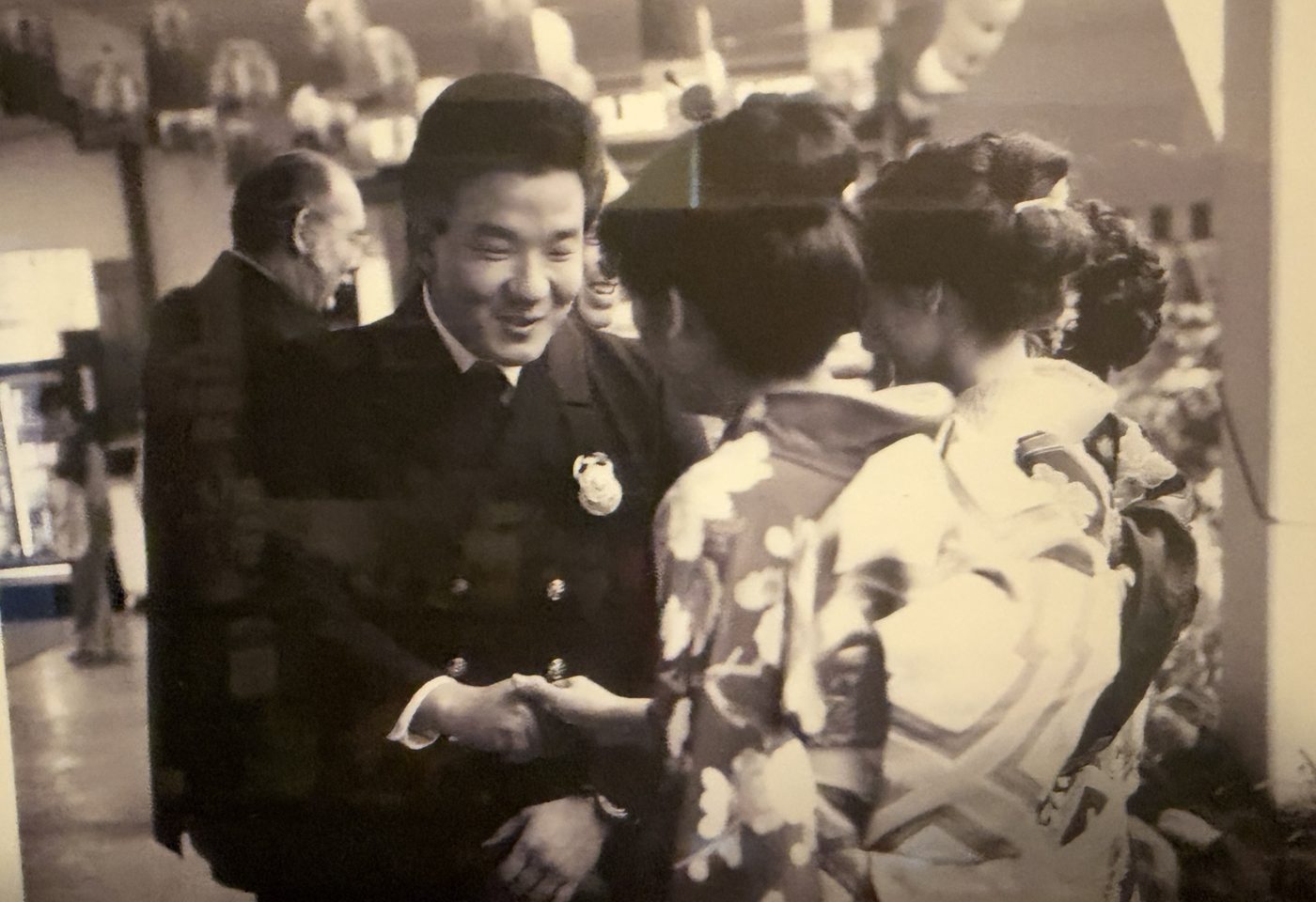
A Japanese American firefighter in dress uniform greeting women in kimono at a Japantown cultural event, 1979
1979. A Japanese American firefighter attends a cultural event in Japantown.
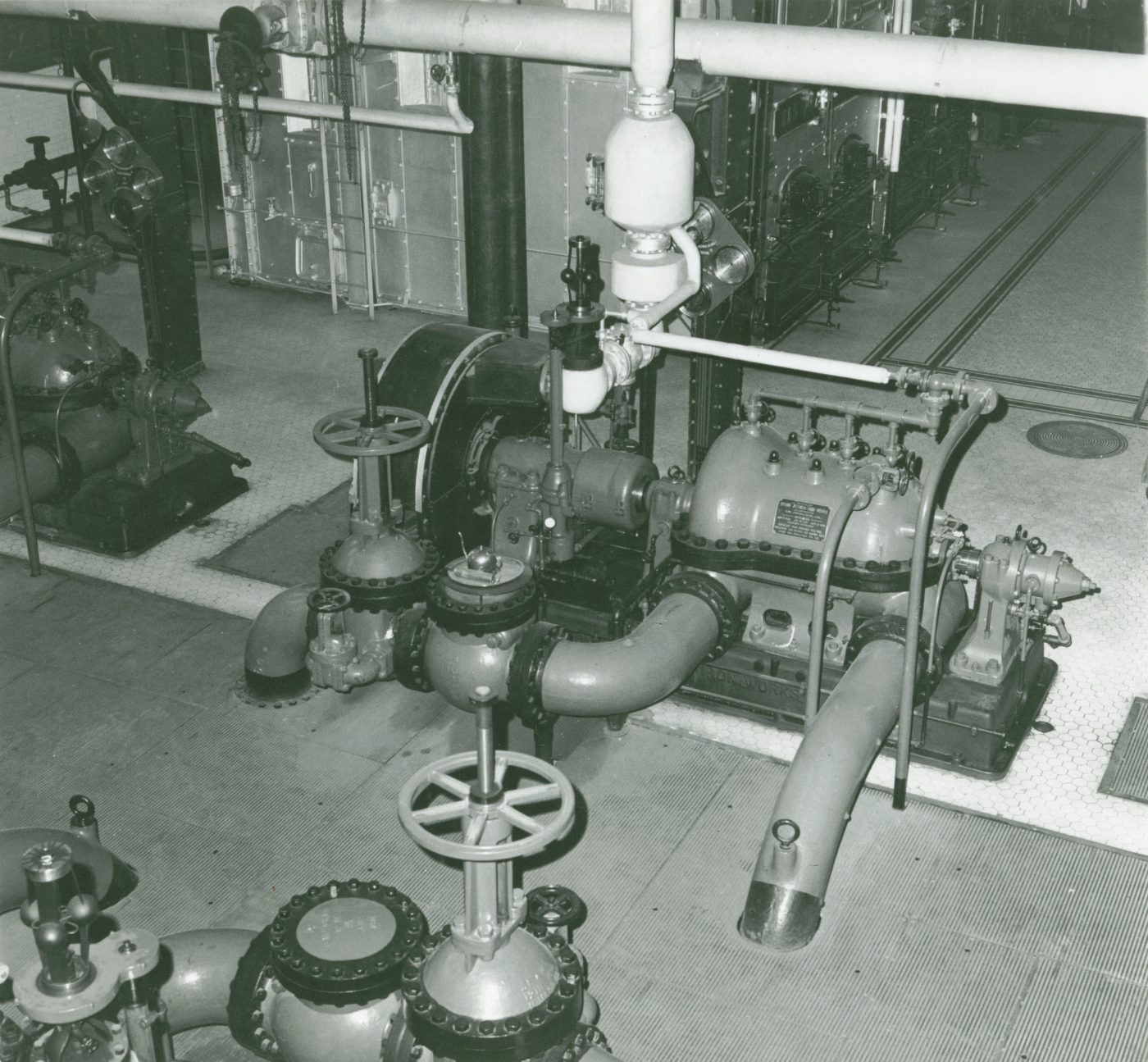
Auxiliary Water Supply pump station, 1972
1972. Inside Pump Station No. 1 of the high-pressure water system.
1975 Gartland fire
1975. The Gartland fire.
Ladder operations at the 1975 Gartland fire
1975. Ladder work at the Gartland fire.
1980s

New faces, and another earthquake

Emmet C. Condon 1982–1986Edward J. Phipps 1986–1988Frederick F. Postel 1988–1992

Los Bomberos

As Hispanic recruits entered the department in growing numbers, Latino firefighters established Los Bomberos de San Francisco in August 1986. Dedicated to recruitment, bilingual community outreach and promotional equity, Los Bomberos joined civil rights advocates, including the Mexican American Legal Defense and Educational Fund, in pushing for systemic reform, paving the way for leaders like Lorrie Kalos, the department's first Latina officer.

Women join the ranks

Women were barred from even applying to become San Francisco firefighters until 1976, and discriminatory physical agility testing kept them out of the firehouse for another decade. After sustained legal challenges overhauled testing standards, the department's first gender-integrated academy classes graduated in 1987. Known as “Feinstein's Finest” after Mayor Dianne Feinstein, seven pioneering women, including Sheila Hunter and Frances Focha, joined the uniformed ranks that August. In 1988 a federal consent decree institutionalized fair hiring and promotional pathways for all underrepresented groups. Among those who soon followed was Joanne Hayes-White, who joined in 1990 and would one day lead the department.

October 17, 1989

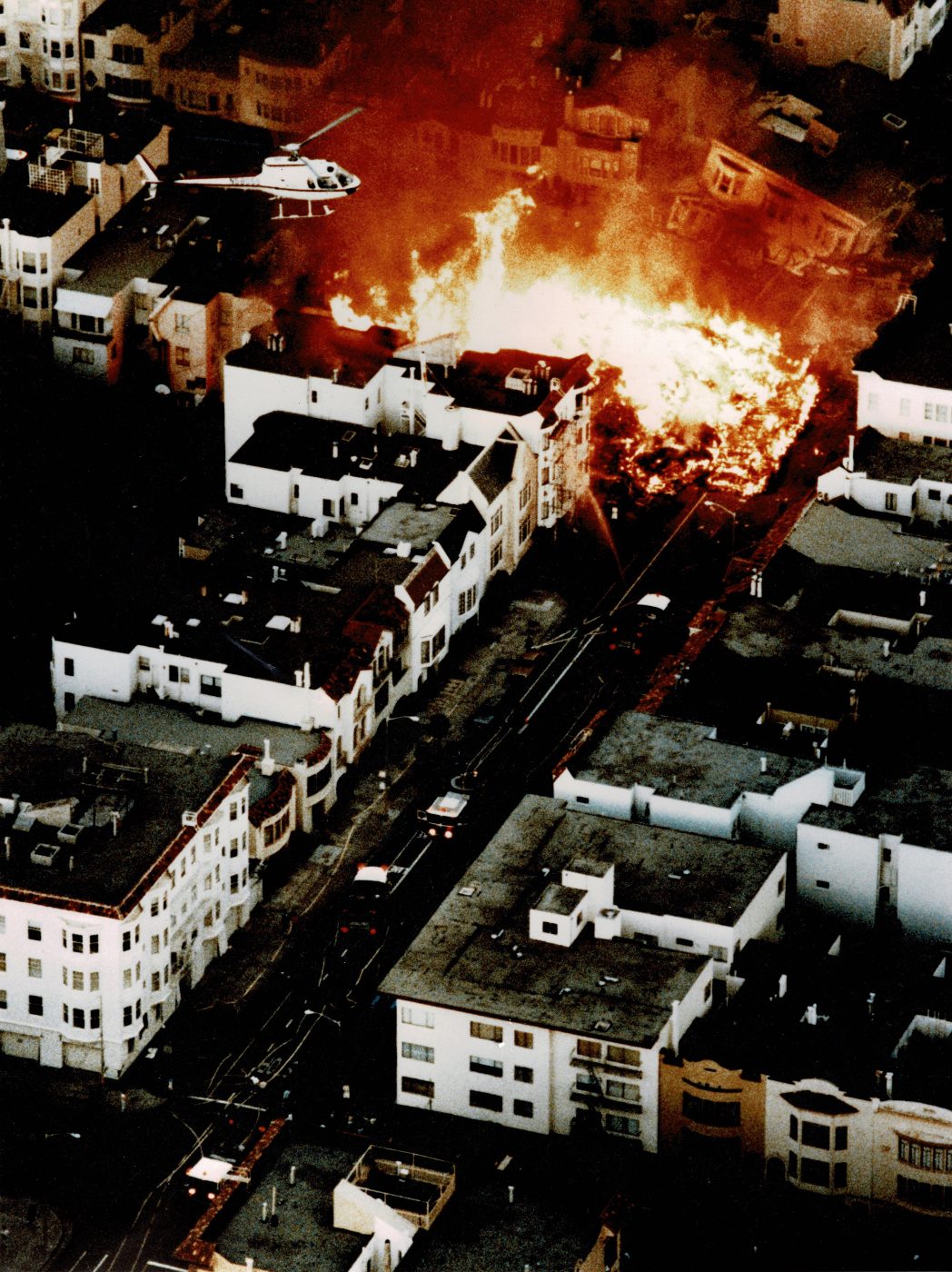
At 5:04 in the afternoon the Loma Prieta earthquake struck. In the Marina District, buildings collapsed onto broken gas lines and fire broke out while the water mains failed, just as they had in 1906. The fireboat Phoenix, which the city had nearly retired a few years earlier, tied up at the shoreline and pumped Bay water through hose laid by firefighters and residents, helping stop the fire from spreading through the district.

Four Asian American firefighters in front of the engine at Station 16, 1983
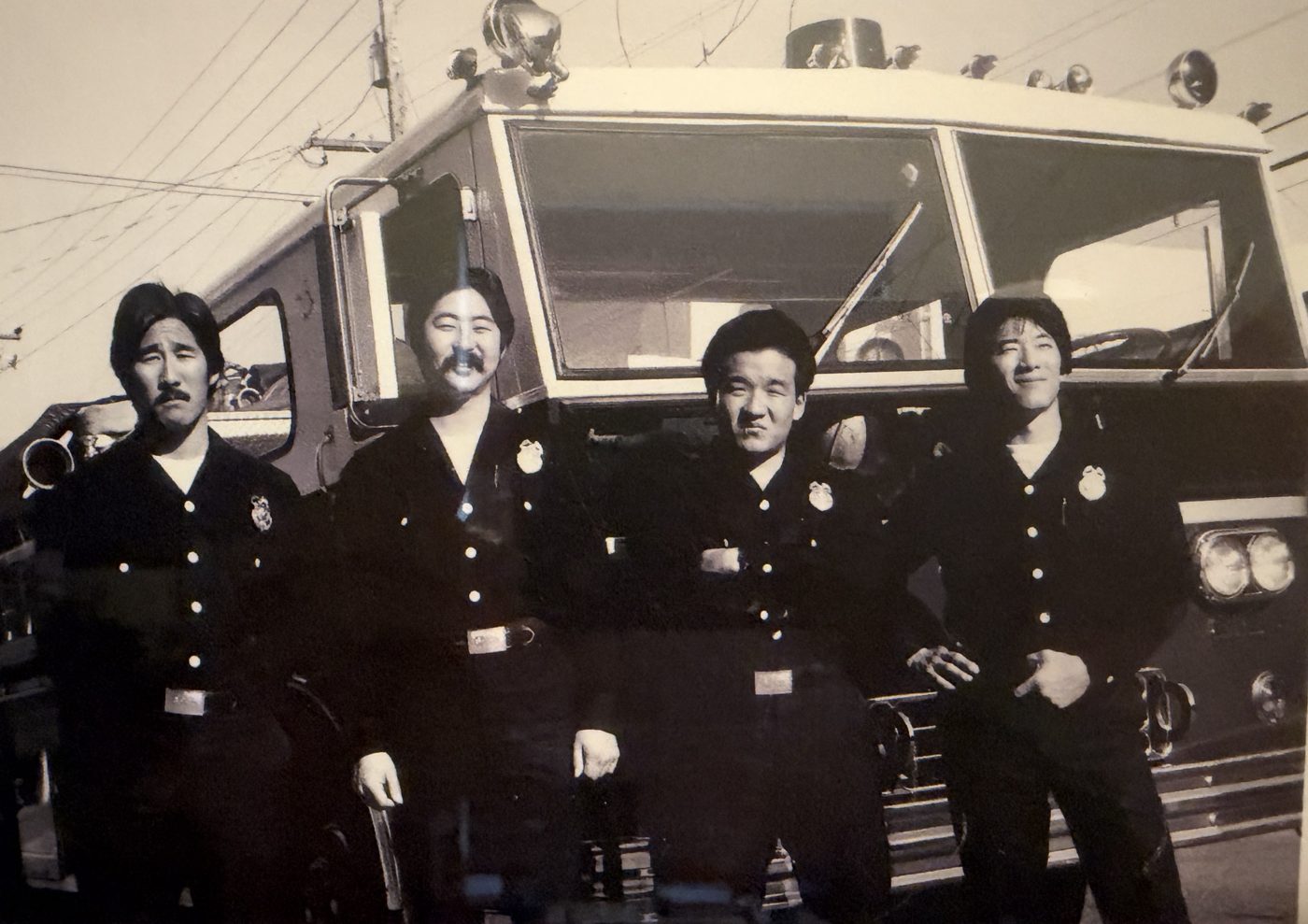
1983. Four Asian American firefighters in front of Station 16.
1986 SFFD recruitment flyer showing a diverse group of firefighters with Engine 41
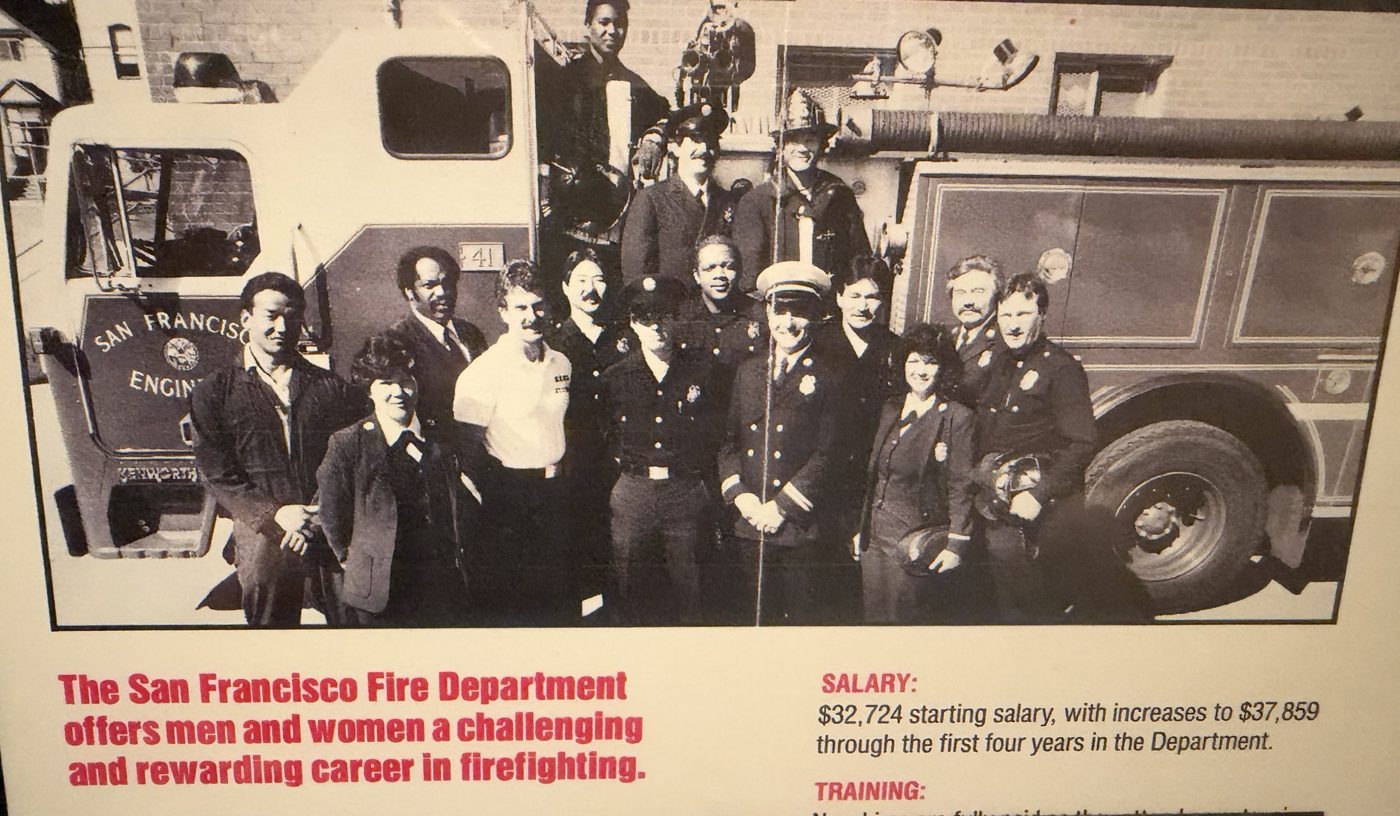
1986. A department recruitment flyer: “The San Francisco Fire Department offers men and women a challenging and rewarding career in firefighting.”
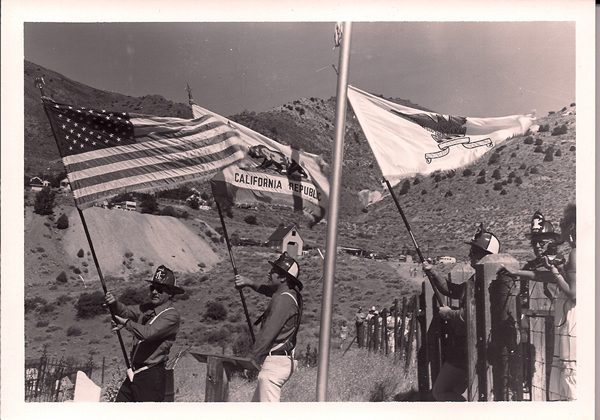
Color guard at the rededication of William Mullen's grave, 1984
1984. Color guard at the rededication of volunteer fireman William Mullen's grave.
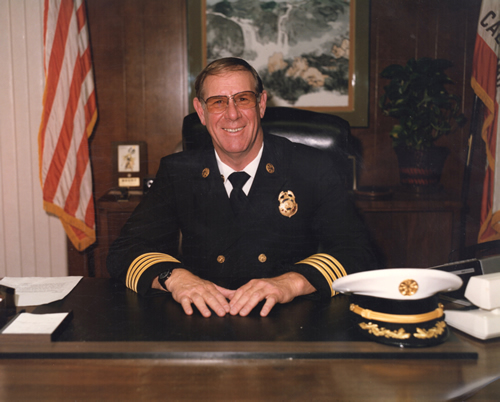
Chief Edward J. Phipps at his desk
Chief Edward J. Phipps. Chief of Department, 1986–1988.
Marina District fire after the Loma Prieta earthquake, 1989
October 17, 1989. The Marina District fire after the Loma Prieta earthquake.
1990s

A department that looks like its city

Frederick F. Postel to 1992Joseph A. Medina 1992–1996Robert L. Demmons 1996–2000

Loma Prieta proved the city needed more than one fireboat. In 1990 grateful Marina residents and anonymous donors bought and refitted a second vessel, renamed Guardian, which joined Phoenix on the waterfront.

In October 1991, when the Oakland Hills firestorm swept across the Bay, San Francisco sent strike teams to help fight it.

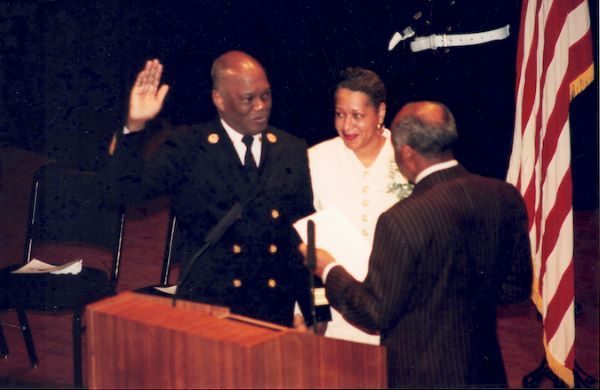
In January 1996 Mayor Willie Brown appointed Robert L. Demmons the first African American Chief of the San Francisco Fire Department. A co-founder of the San Francisco Black Firefighters Association, he had spent decades fighting to open the department's ranks to people of every background, and his rise from the integrated academy of 1974 showed how far the department had come. That same year Joanne Hayes-White became the department's first female captain.

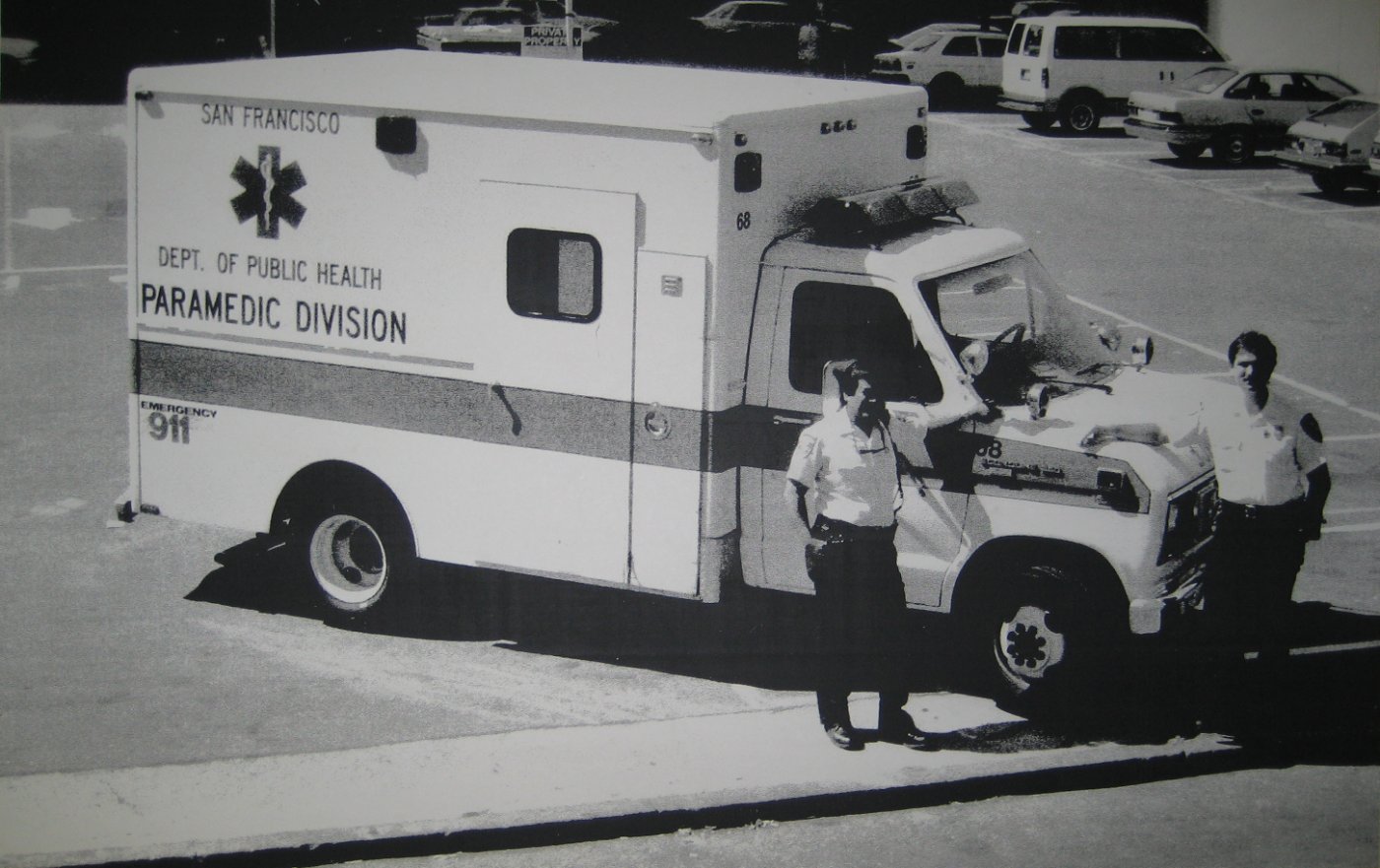
In 1997 the city's paramedics, who had served for generations under the Department of Public Health, became part of the Fire Department. The fire and medical dispatch centers were combined in 1998. Medical calls soon made up most of the department's work, and firefighters, EMTs and paramedics now share the same stations and the same mission.

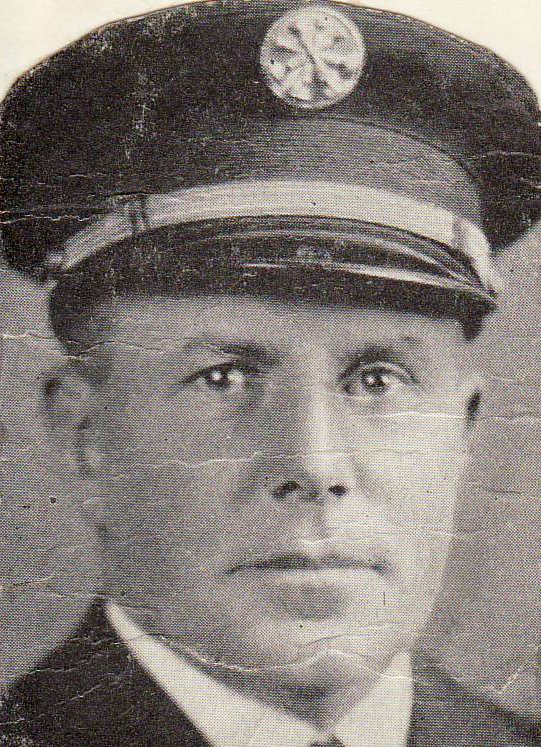
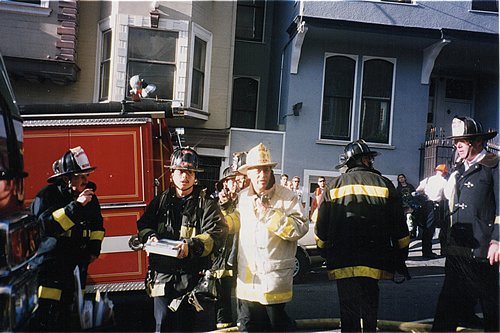
Chief Joseph A. Medina at a fire scene
Chief Joseph A. Medina on the fireground. He led the department from 1992 to 1996.
Chief Robert L. Demmons sworn in, 1996
1996. Robert L. Demmons takes the oath as Chief. His story →
Department of Public Health Paramedic Division ambulance
The Paramedic Division. City paramedics with their ambulance before the 1997 merger brought them into the Fire Department.
2000s

A first for big-city fire departments

Paul J. Tabacco 2000–2001Mario H. Trevino 2001–2004Joanne Hayes-White 2004–2019

After the attacks of September 11, 2001, San Francisco firefighters traveled east to stand with the FDNY, and at home the department strengthened its hazardous-materials, heavy-rescue and homeland security readiness. In 2002 the 1908 firehouse of Engine Company No. 2 on Bush Street was listed on the National Register of Historic Places.

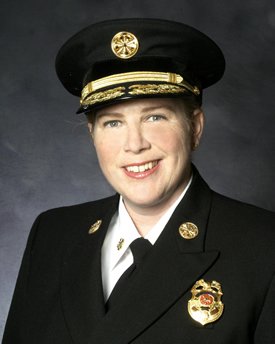
On January 16, 2004, Joanne Hayes-White was sworn in as Chief of Department. A native San Franciscan who joined in 1990 as one of the department's first women, she made San Francisco the largest urban fire department in the world led by a woman. She would serve fifteen years.

April 18, 2006: the centennial of 1906

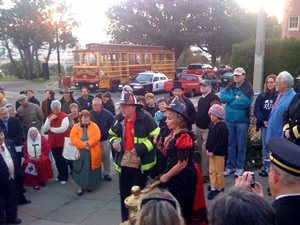
Thousands of San Franciscans filled Market Street before dawn on April 18, 2006, for the 100th anniversary of the earthquake and fire. About a dozen survivors of 1906, all past 100 years old, were honored at Lotta's Fountain. As the clock neared 5:12 a.m., Mayor Gavin Newsom joined the fire and police chiefs in laying a wreath at the fountain; then sirens sounded, church bells rang and a horse-drawn fire wagon raced down Market Street to the fountain. Afterward the crowd moved on to the Golden Hydrant for its gilding.

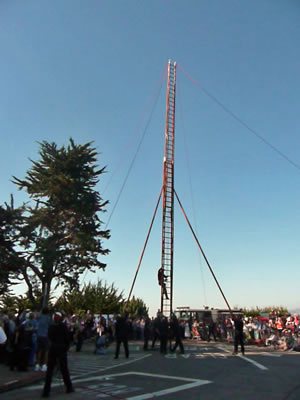
The survivors are gone now, but the department has carried both traditions forward. Every April 18, firefighters, chiefs and engine companies still gather at Lotta's Fountain at 5:12 a.m. and then at 20th and Church to paint the hydrant gold. The decade also brought other celebrations of the city's fire history: in 2008 firefighters in vintage uniforms raised hand ladders below Coit Tower for its 75th anniversary.

Chief Joanne Hayes-White
Chief Joanne Hayes-White. Chief of Department, 2004–2019.
Firefighters in vintage uniforms at Coit Tower's 75th anniversary, 2008
2008. A ladder team in vintage uniforms at Coit Tower's 75th anniversary.
Raised ladder at the 2008 Coit Tower anniversary
2008. A hand-raised ladder goes up at the Coit Tower celebration.
Crowd at the Golden Hydrant ceremony, 2009
April 18, 2009. The annual repainting of the Golden Hydrant at 20th and Church Streets.
2010s

150 years, and a new fireboat

Joanne Hayes-White to 2019Jeanine Nicholson 2019–2024

On July 6, 2013, Asiana Airlines Flight 214 crashed on landing at San Francisco International Airport with 307 people aboard. Airport and city firefighters attacked the burning jet and triaged the injured, and all but three of those aboard survived.

In 2010 a group of San Francisco historians and first responders came together as Guardians of the City, a nonprofit dedicated to preserving the history of the city's Fire, Police, Sheriff and Emergency Medical services. On October 17, 2010, the 21st anniversary of Loma Prieta, they dedicated a Victorian firehouse at 1152 Oak Street as their first headquarters. Today Guardians cares for the San Francisco First Responder Museum & Safety Learning Center at 655 Presidio Avenue, the museum founded there in 1964.

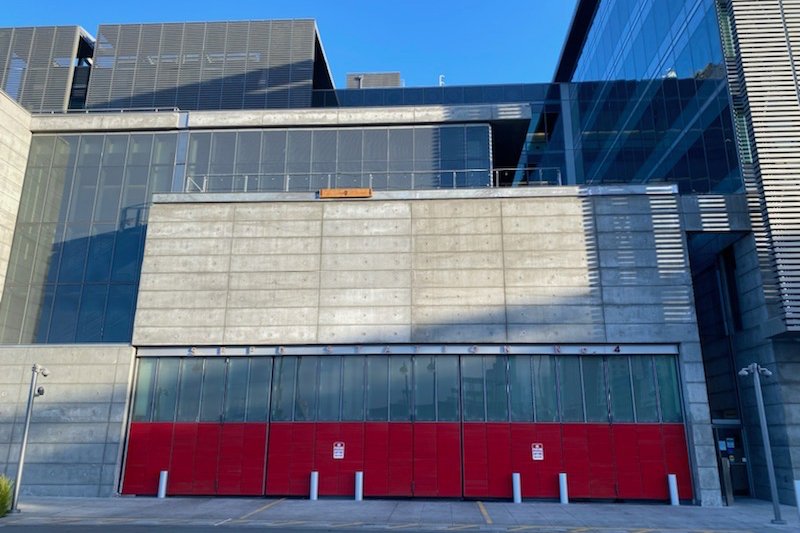
On March 28, 2015, the new Fire Station 4 went into service in Mission Bay as part of the city's Public Safety Building campus at Third Street and Mission Rock, alongside the new Police Headquarters and Southern Police Station. Built to modern seismic standards and able to run for up to 96 hours off the power grid, the campus also gave the department's Arson Task Force a home in the restored historic firehouse next door.

During the decade the department also established its Public Information Office, giving the news media and the public a single, trained point of contact for emergencies, safety campaigns and department news.

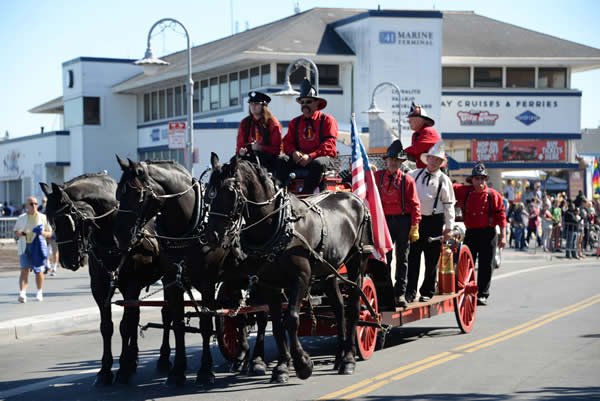
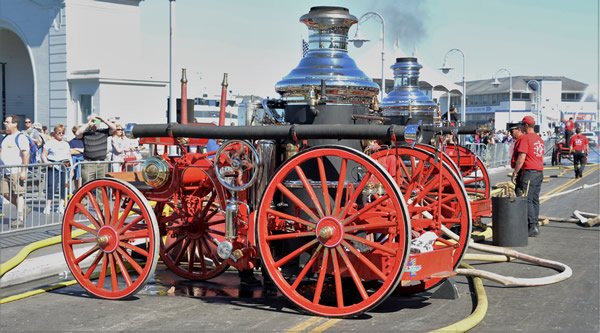
In 2016 the department celebrated its 150th anniversary with Guardians of the City. The year began on April 18 in Union Square after the annual 1906 earthquake ceremony at Lotta's Fountain, and continued with a grand parade and historical exhibition at Fisherman's Wharf on September 24 and 25, where horse teams pulled steam engines through the streets once more. It ended on December 3 with an anniversary gala.

On October 17, 2016, the 27th anniversary of Loma Prieta, the city christened its third fireboat, St. Francis, joining Phoenix and Guardian at Station 35.

When Chief Hayes-White retired in May 2019, Jeanine Nicholson was sworn in as the 26th Chief of Department, the second woman and the first openly LGBTQ chief to lead the department.

The Victorian firehouse at 1152 Oak Street
2010. The firehouse at 1152 Oak Street, dedicated as the first headquarters of Guardians of the City.
Fire Station 4 at the Public Safety Building in Mission Bay
2015. Fire Station 4, part of the Public Safety Building campus in Mission Bay. Photo: San Francisco Fire Department.
Firefighters at the 2015 Silver Twins ceremony
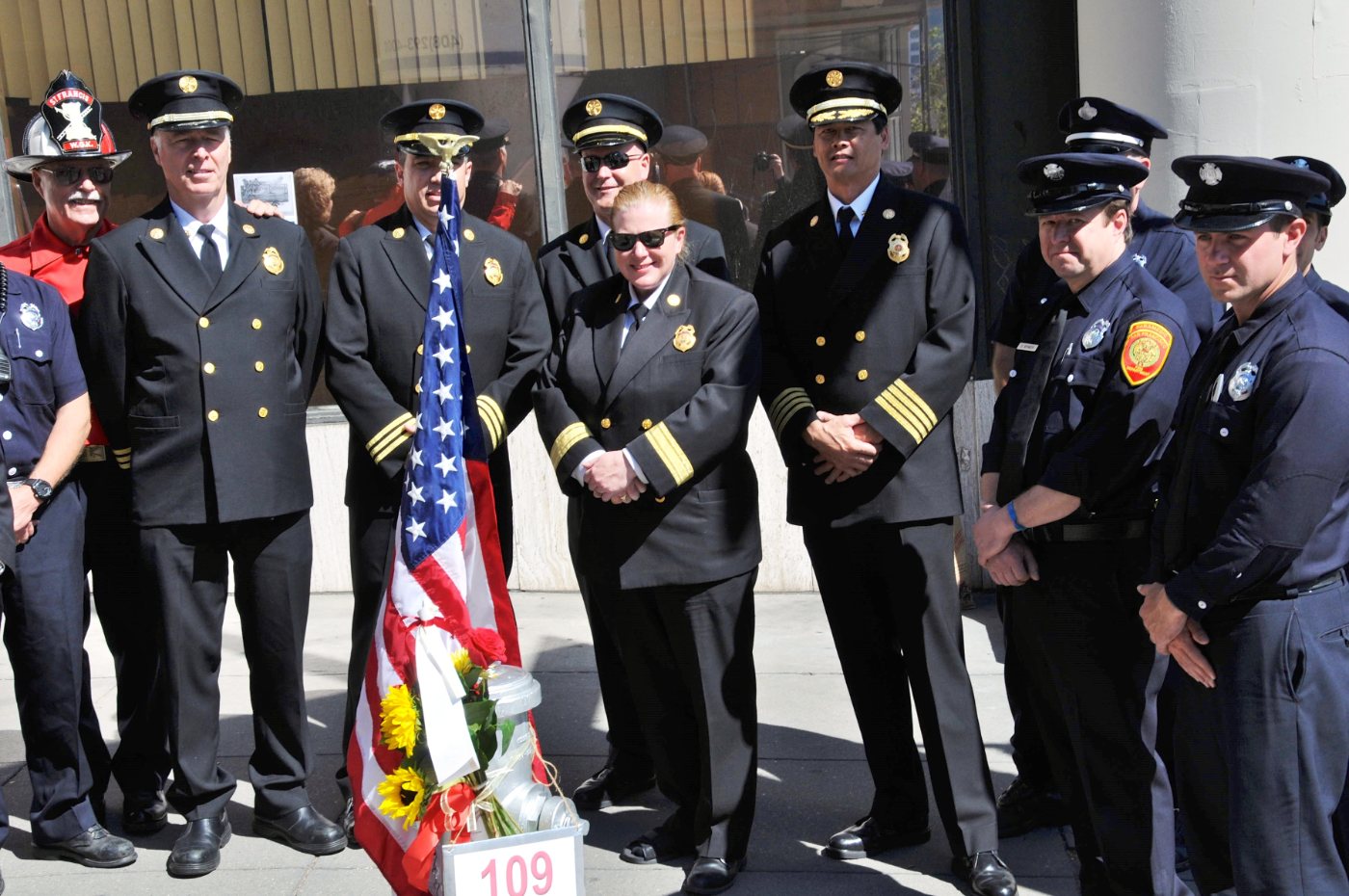
2015. Firefighters at the annual Silver Twins hydrant ceremony.
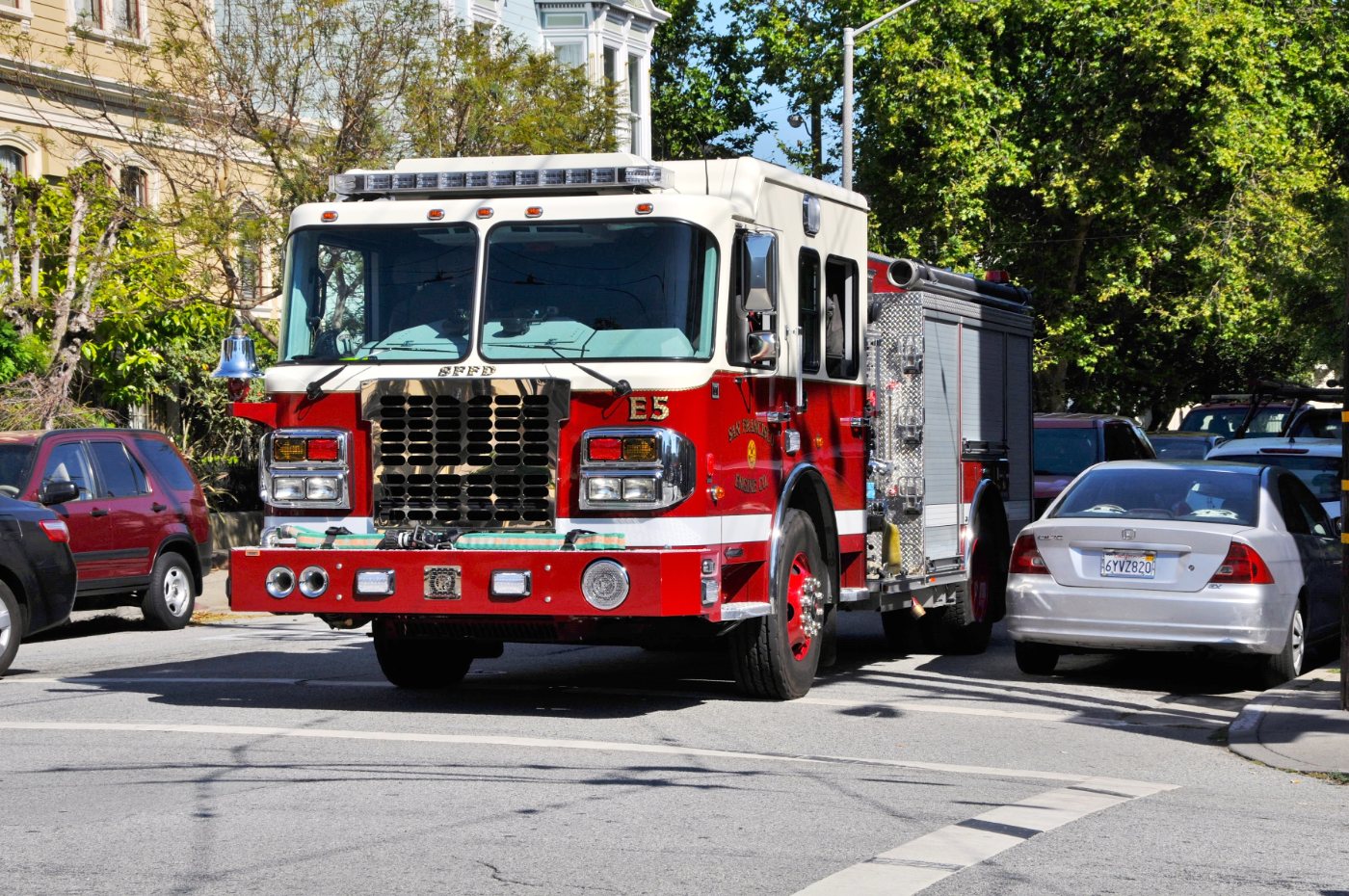
Engine Company No. 5, 2015
2015. Engine Company No. 5 and a modern pumper.
Horse-drawn steam engine at the 2016 150th anniversary parade
September 24, 2016. A horse-drawn steamer in the 150th anniversary parade at Fisherman's Wharf.
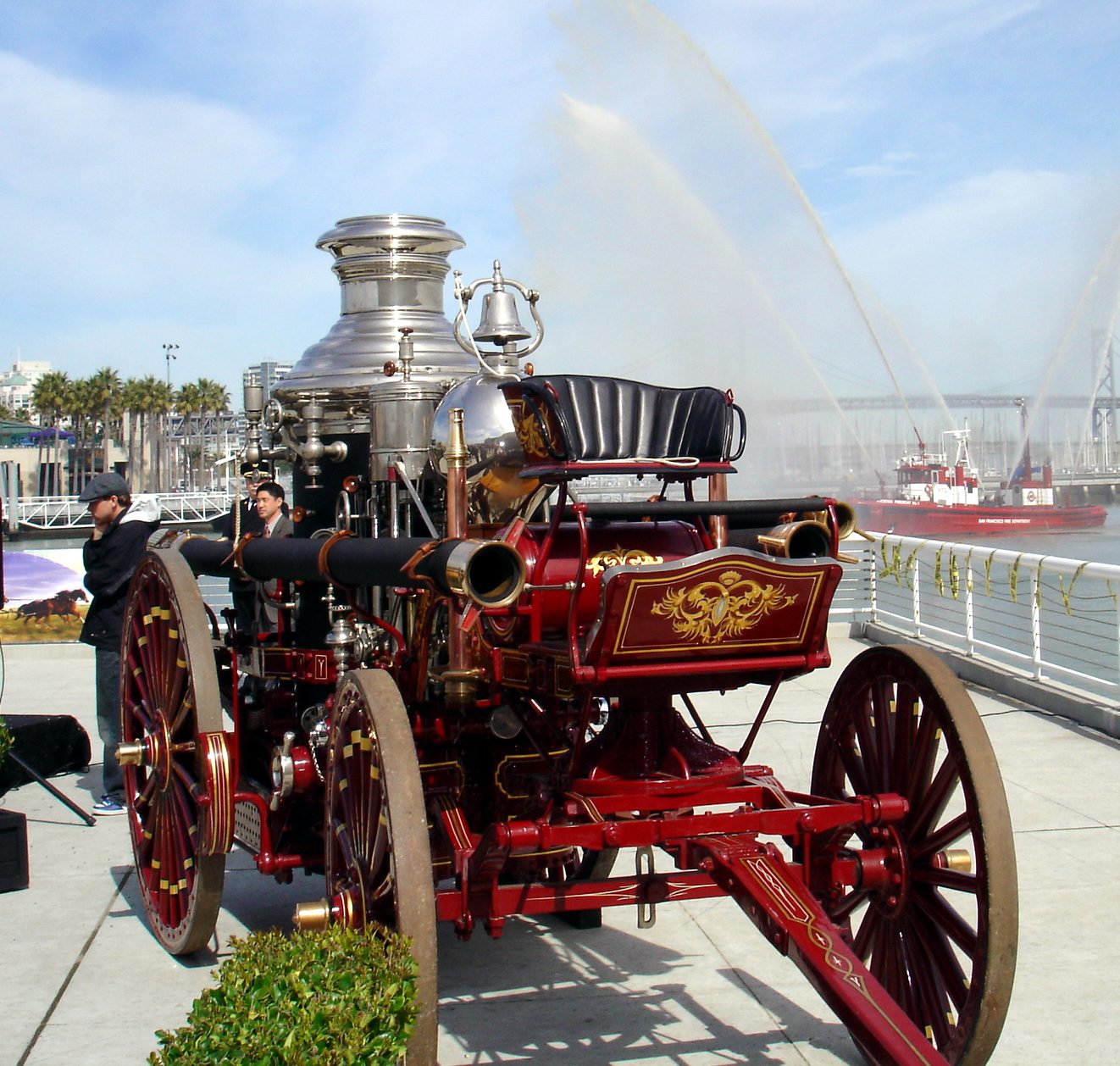
Antique steam engine pumping water in 2016
2016. A century-old steamer working again at the 150th historical exhibition.
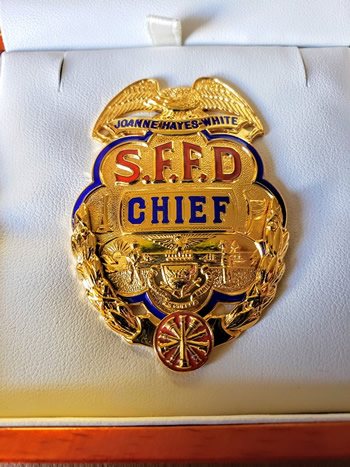
Commemorative badge presented to Chief Hayes-White on her retirement
2019. The commemorative badge presented to Chief Hayes-White on her retirement.
2020s

New stations, new water

2020 – 2024

Jeanine Nicholson 2019–2024Sandra Tong 2024–2025

The 2020s opened with the COVID-19 pandemic, and the department adapted: new programs such as Street Crisis Response and Community Paramedicine brought care to people in crisis, and crews deployed across California to fight major wildfires.

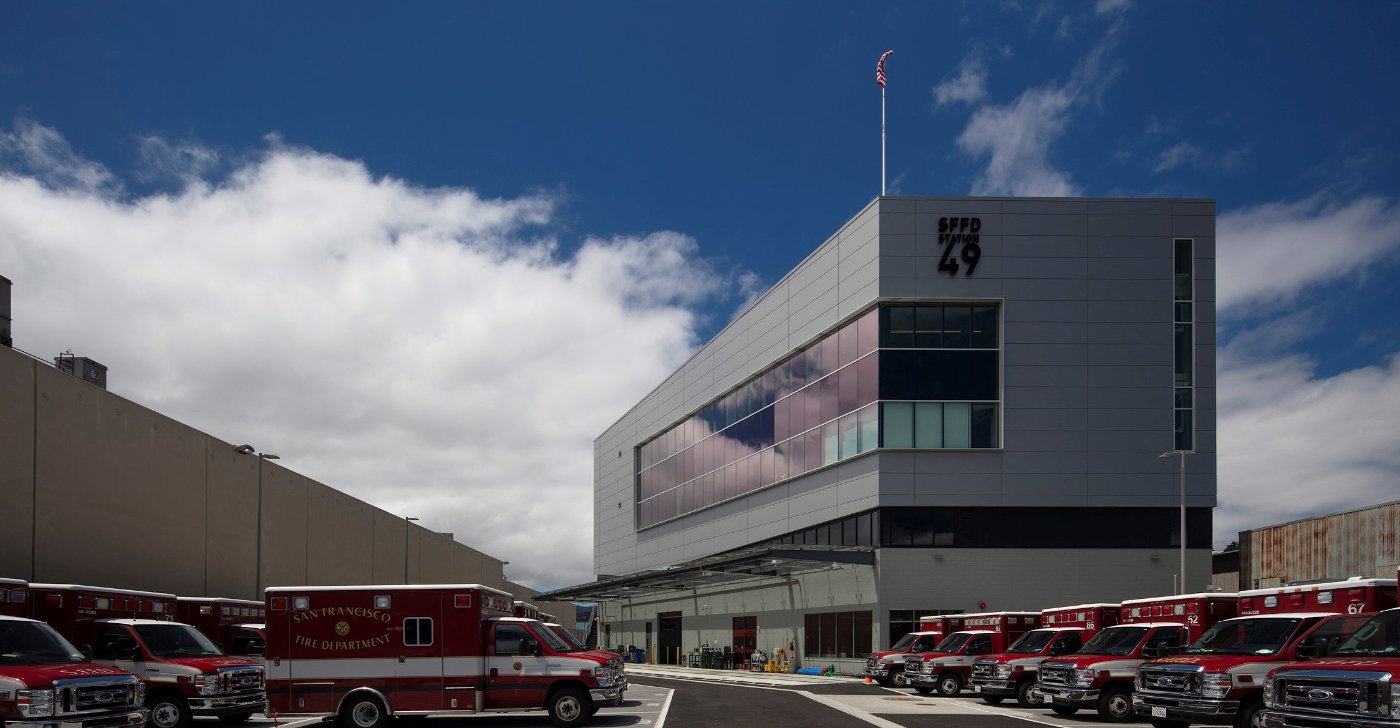
In 2021 the department moved into the new Station 49 at 2241 Jerrold Avenue in the Bayview, a four-story, 58,451-square-foot, seismically safe hub for modern ambulance operations, where the city's ambulances are stocked, serviced and deployed citywide. In March 2022 the new Fireboat Station 35 opened at Pier 22½, the first floating fire station in the Western Hemisphere, built to rise and fall with the tides beside the historic 1915 station.

New water for the next big one

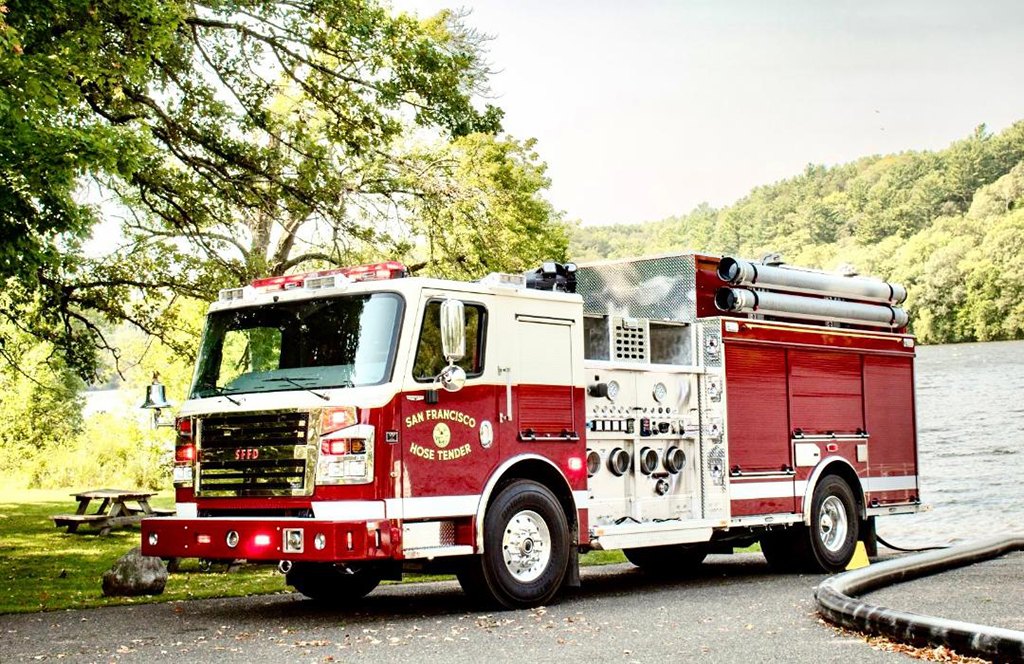
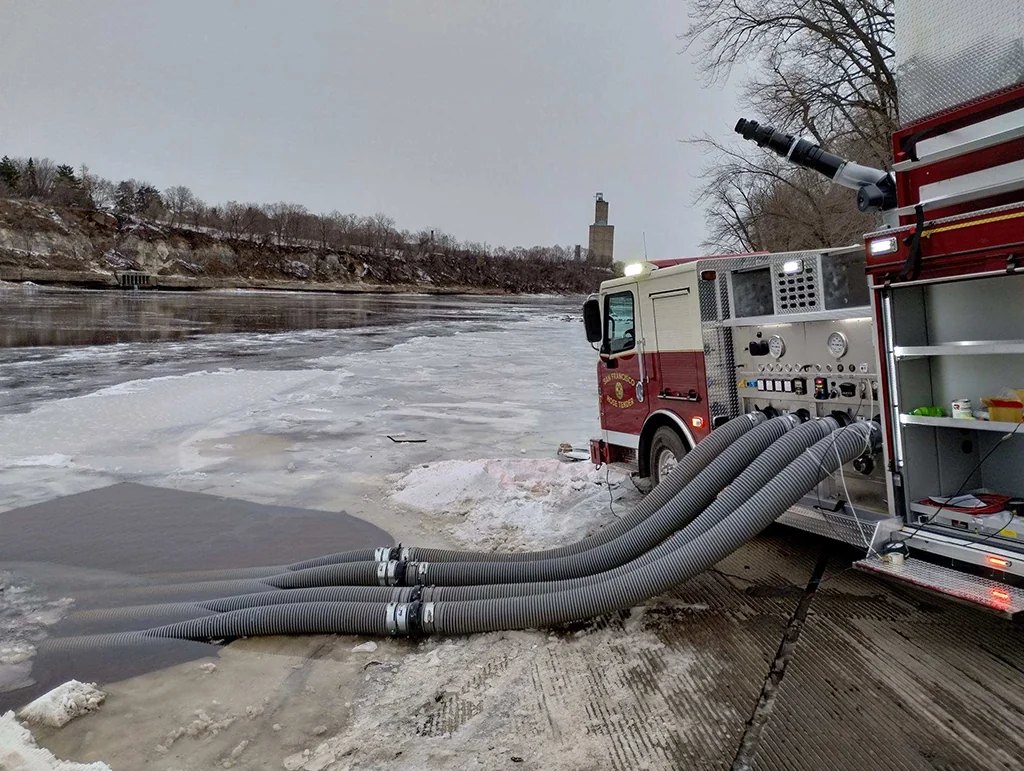
Remembering 1906 and 1989, when water mains failed after an earthquake, the department added three Rosenbauer hose tenders, large mobile pumps built to draft water from Lake Merced, Spreckels Lake, Blue Heron Lake or San Francisco Bay and send it to a fire through miles of large-diameter hose. Each can pump 5,500 gallons a minute, more than three times a standard fire engine, and carries 6,000 feet of five-inch hose and a submersible pump for water it cannot reach directly. In February 2024 the department put them to work in a public demonstration at the Lake Merced boat ramp. Around the same time, the Public Information Office expanded to round-the-clock, 24-hour service.
Chief Nicholson retired in 2024, and Chinatown native Sandra “Sandy” Tong was appointed Interim Chief of Department, the first Asian American to lead the SFFD, serving into 2025.

Station 49, the ambulance deployment facility on Jerrold Avenue
2021. Station 49 on Jerrold Avenue, the hub of the city's ambulance fleet. Photo: San Francisco Fire Department.
One of the department's new Rosenbauer hose tenders
New hose tender. One of three Rosenbauer high-volume hose tenders, each able to pump 5,500 gallons a minute. Photo: San Francisco Fire Department.
A new hose tender drafting water through large suction hoses
Drafting. A new hose tender pulling water straight from open water through its large suction hoses during testing. Photo: San Francisco Fire Department.
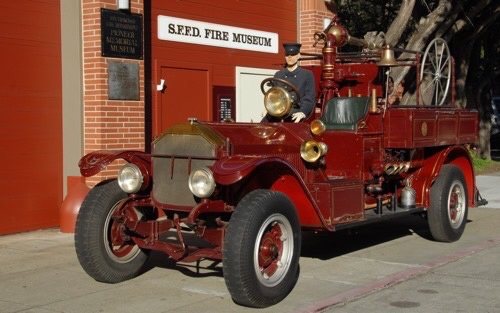
1914 American LaFrance Hose Tender No. 6 in the museum
Then. The museum's 1914 American LaFrance Hose Tender No. 6, an ancestor of today's hose tenders, cared for by Guardians of the City.
2025

Chief Crispen and 160 years of service

2025 – December 3, 2026

Dean Crispen 2025–

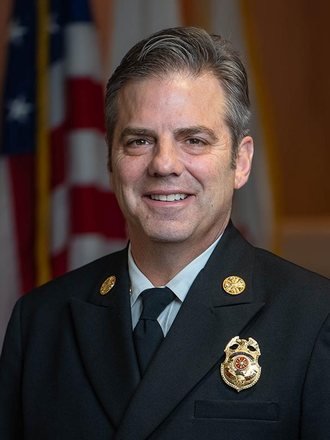
On January 21, 2025, Dean Crispen was sworn in as the 27th Chief of the San Francisco Fire Department, the first appointment of the city's new mayor, Daniel Lurie. A native San Franciscan and second-generation firefighter whose father retired as a captain in the department's Arson Division, Crispen joined the SFFD in July 1990 as a firefighter EMT. He went on to captain firehouses in Chinatown, North Beach and South of Market, was honored three times for rescuing elderly residents from fires in the Tenderloin, served as Incident Commander at more than fifty major incidents, and took part in the relief effort in New York City after September 11, 2001.

A department for a city coming back

Chief Crispen took command as San Francisco worked to recover from the pandemic years, and he set the tone on his first day: his number one goal, he said, was to safeguard the health and safety of every member of the department and every San Franciscan. He asked firefighters to stay closely connected to the neighborhoods they serve, caring not just about the shine on the engine or the ambulance but about the health of the block around the firehouse.

Under his leadership the department became a full partner in the city's public safety strategy. Its paramedics and street crisis teams joined a coordinated citywide effort to respond to behavioral health emergencies and the fentanyl crisis, and the department pressed fire prevention and public education to reduce fires and keep streets safer. In his first weeks, San Francisco firefighters deployed to help battle the Southern California wildfires, and at home the chief led a citywide preparedness drill at Fireboat Station 35, testing the high-pressure hydrant system and the fireboat St. Francis and urging residents to train with NERT and be ready for the next earthquake. Today the department answers well over a hundred thousand medical calls a year alongside fires, rescues, water emergencies and disasters, from more than forty firehouses and three fireboats.

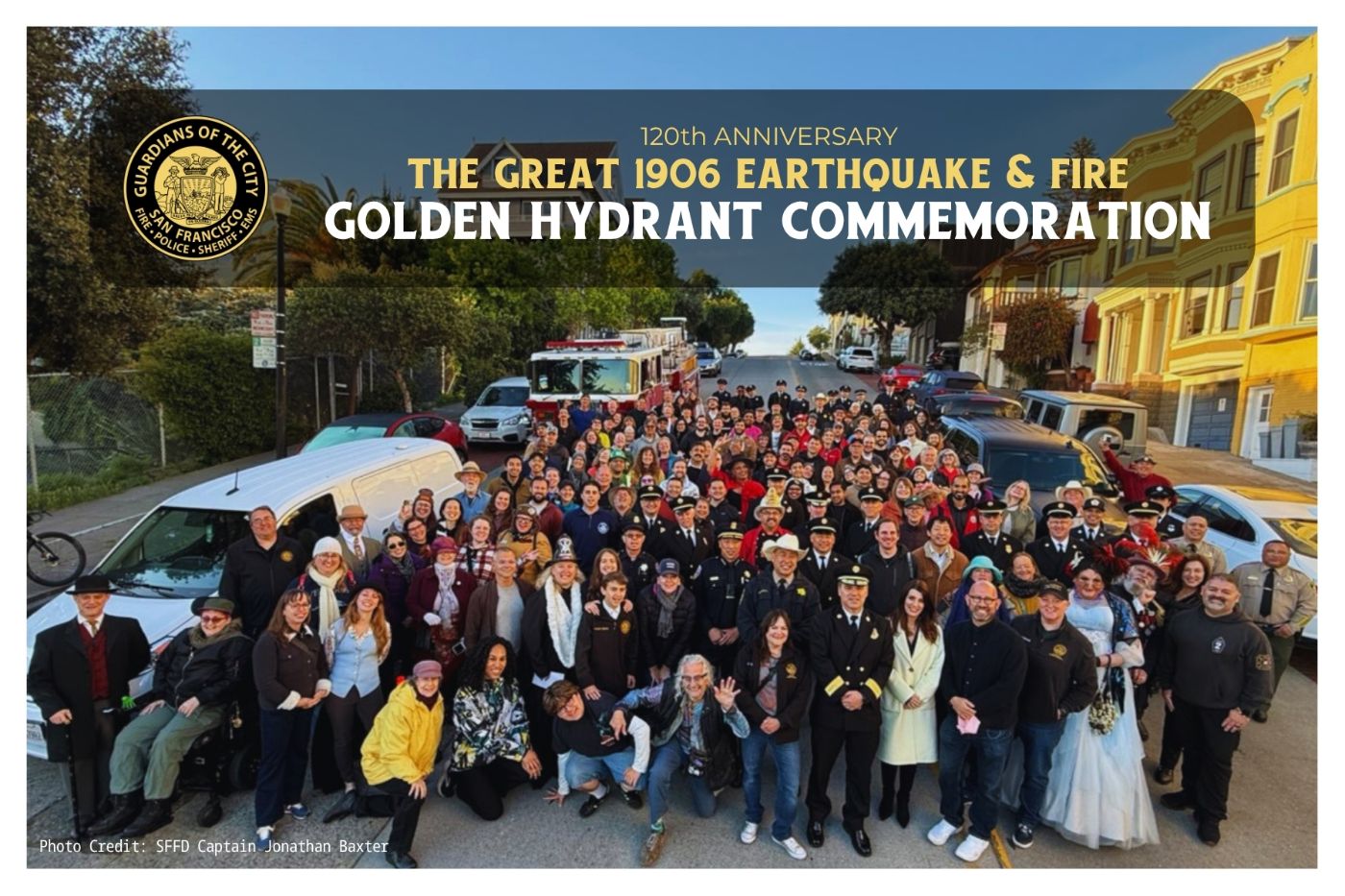
In 2025 the city marked 130 years of municipal ambulance service, the service that began with a single horse-drawn ambulance in 1895. In 2026 the department helped the city welcome the world for a year of major events, beginning with Super Bowl LX week in February. On April 18, 2026, crowds gathered before dawn at Lotta's Fountain and the Golden Hydrant for the 120th anniversary of the 1906 earthquake and fire, keeping alive traditions that firefighters have shared with the city for generations.

And on December 3, 2026, the San Francisco Fire Department marks 160 years since it was organized. The tools have changed beyond recognition since the Amoskeag steamers rolled out of the engine houses in 1866. The promise has not. One hundred sixty years later, when San Francisco calls, the San Francisco Fire Department answers. Meet every chief since 1850 →

Chief Dean Crispen
Chief Dean Crispen. 27th Chief of Department, since 2025. His story →
Crowd at the 120th anniversary Golden Hydrant commemoration, April 2026
April 18, 2026. The community gathers at the Golden Hydrant for the 120th anniversary of the 1906 earthquake and fire.
The next 160 years

Your name could be in the next chapter

Every page of this story was written by San Franciscans who answered the call: the volunteers who ran to the bells in 1849, the first paid crews of 1866, the firefighters who held the line in 1906, and the men and women who opened the ranks so the department would look like the city it serves.

That history is still being written, and the San Francisco Fire Department is looking for the people who will write it. Firefighters, EMTs, paramedics and the civilian professionals who keep the department running all carry the same 160-year-old promise. If this history moves you, come be part of it.

Careers as a firefighter, EMT, paramedic or civilian professional, with details on how to apply and the next academy.

Who keeps this story

Guardians of the City

Every photo on this page comes from the collection of Guardians of the City, the volunteer nonprofit that preserves the history of San Francisco's Fire, Police, Sheriff and EMS departments.

Guardians cares for the San Francisco First Responder Museum & Safety Learning Center at 655 Presidio Avenue, home to the 1855 Broderick engine, Coffee Unit No. 1 and thousands of artifacts, and keeps this history free for everyone to explore.

Visit the museum: 655 Presidio Avenue, Thursday through Sunday, 1 to 4 PM, as staffing permits. Admission is free.

The 1855 Broderick engine in the San Francisco First Responder Museum
Celebrate 160 years

Three ways to be part of the next 160

Give

Support the museum

Your gift keeps the collection cared for, the museum open and this history online, free for everyone.

❤ Give to Guardians
Restore

Coffee Unit No. 1

Help restore the 1942 Chevrolet that brought hot coffee and comfort to firefighters at San Francisco's biggest fires.

Restore the Coffee Unit
Wear it

Official SFFD merchandise

Shirts, hoodies, patches and challenge coins. Every purchase supports Guardians of the City.

Shop SFFD gear

Share 160 years of SFFD history

Firefighters, families and friends of the department: pass this page along and help us celebrate December 3.

Facebook Email

Short link: gotcsf.org/sffd160